The Ultimate Homemade Cuban Sandwich: A Flavorful Journey to Florida
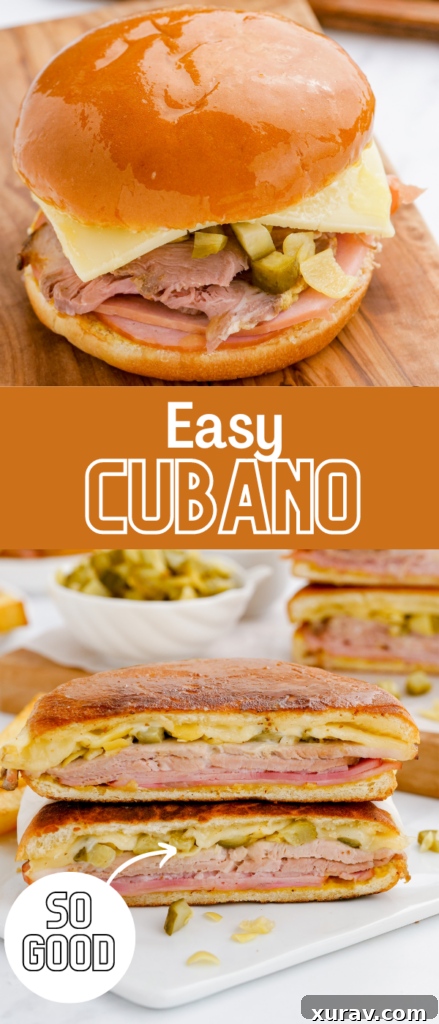
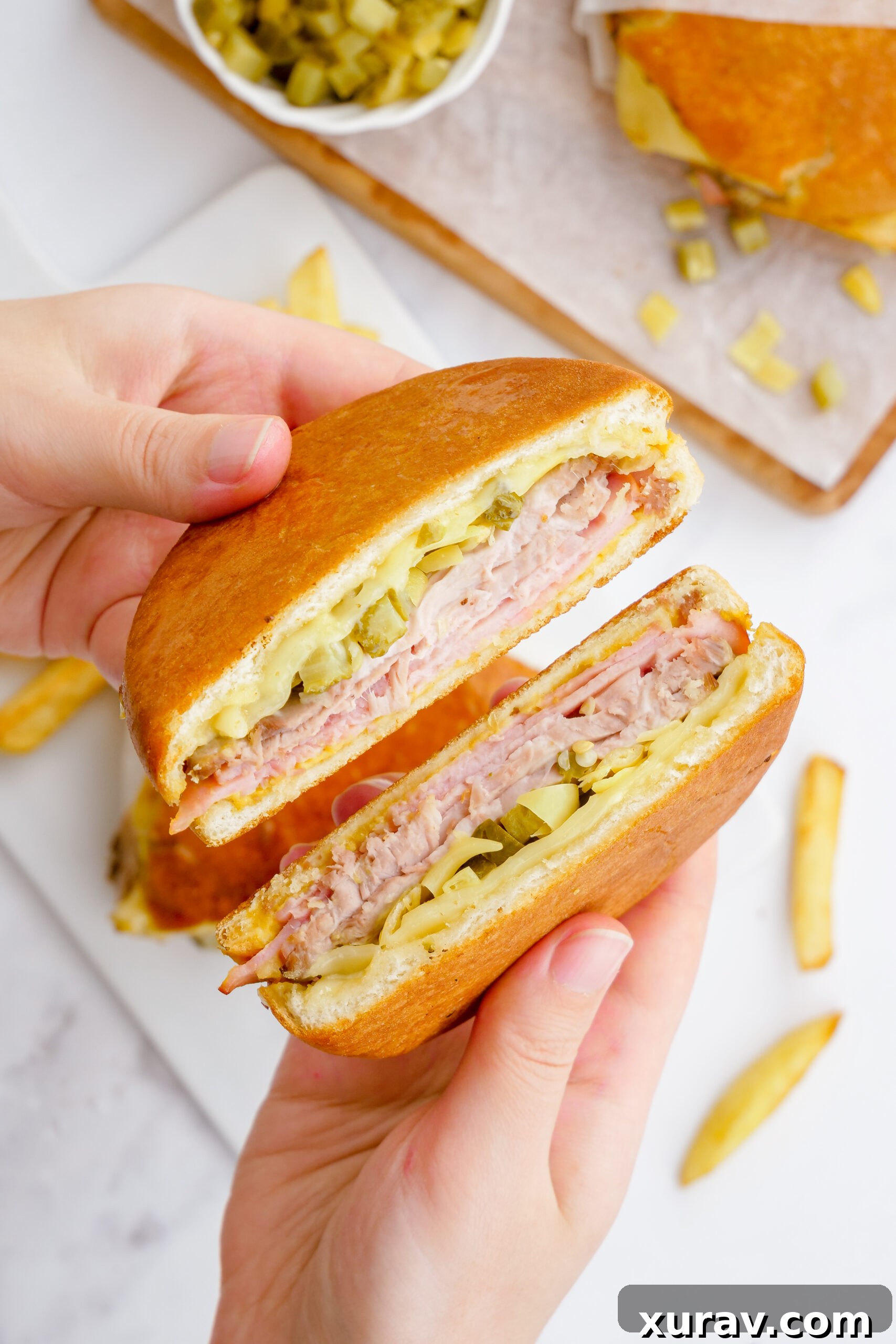
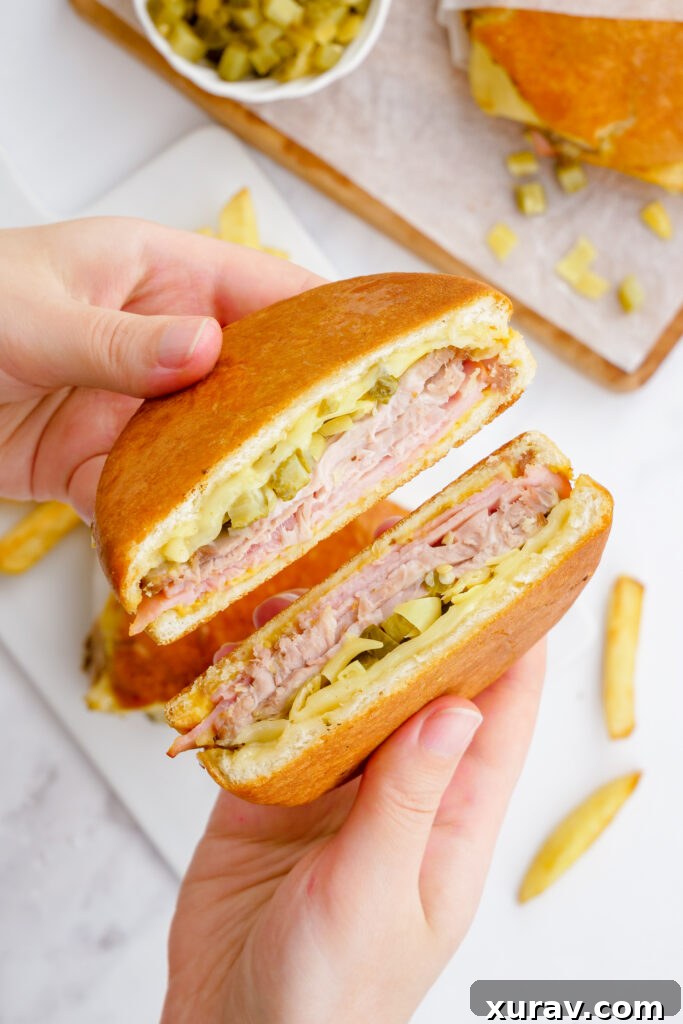
Embark on a culinary adventure with this definitive guide to crafting the perfect Cuban Sandwich, famously known as a “Cubano,” right in your own kitchen. This iconic sandwich transcends mere ingredients, offering a symphony of textures and tastes that has captivated palates for generations. Originating from the vibrant Cuban communities of Florida, the Cubano is a testament to simple ingredients coming together to create something truly extraordinary. Imagine a slightly sweet, crusty bread embracing layers of succulent seasoned roast pork, savory deli ham, tangy dill pickles, creamy Swiss cheese, and a punchy yellow mustard, all pressed to a golden, irresistible crispness. It’s more than just a sandwich; it’s a hearty, flavor-packed experience that will quickly become your new favorite!
Whether you’re planning a fun family lunch or seeking an easy yet impressive dinner, the Cuban sandwich is a versatile choice. It pairs beautifully with classic comfort sides, turning any meal into a special occasion. For a truly complete experience, consider serving your Cubano with crispy Sweet Potato Fries or perfectly golden Air Fryer Fries.
There’s an undeniable allure to the Cubano that makes it utterly irresistible. Perhaps it’s the robust, savory blend of flavors that bursts forth with every bite, or maybe it’s the sheer genius of combining such straightforward components into a masterpiece. After indulging in countless Cuban sandwiches during a recent trip through Florida, from the historic streets of Ybor City to the sunny shores of Miami, I was inspired to recreate this culinary magic at home. My mission, as always here at EZPZ, was to develop a version that is both authentic in spirit and incredibly accessible, using easy-to-find ingredients and straightforward techniques, ensuring anyone can replicate this deliciousness with confidence.
Essential Ingredients for Your Authentic Cubano Sandwiches
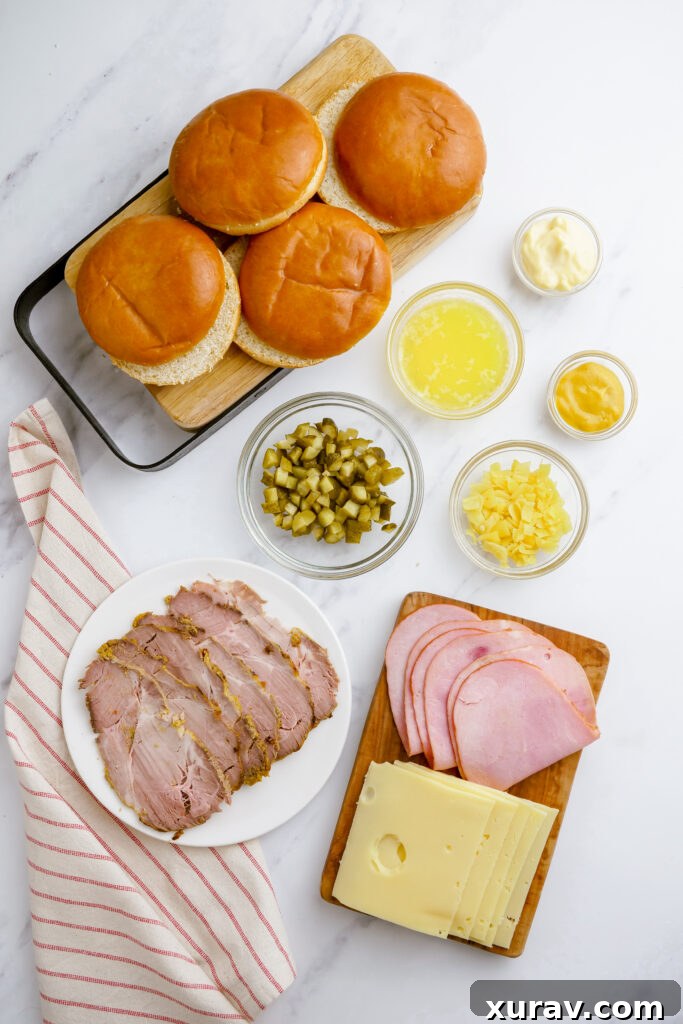
The magic of the Cubano lies in its meticulously constructed layers of flavor. Each ingredient plays a pivotal role, contributing a distinct note to the overall harmony of the sandwich. Therefore, selecting the right components is paramount to achieving that authentic, mouth-watering experience. While there’s healthy debate about what constitutes a “perfect” Cubano, my philosophy centers on quality ingredients that are readily available, making this a delicious deli-style sandwich that’s easy for anyone to assemble.
Here’s a detailed look at what you’ll need to build your own masterpiece:
- Dill Pickles: The Essential Tang
Choose your favorite brand of high-quality dill pickles. The sour, briny crunch of dill pickles is not just an accompaniment; it’s a staple of the Cuban sandwich, providing a crucial counterpoint to the rich meats and cheese. Their acidity cuts through the fat, balancing the flavors beautifully. Dice them finely for even distribution. - Banana Peppers: A Subtle Kick
Do not be tempted to skip these! Banana peppers elevate this sandwich with a subtle sweetness and a mild, tangy heat that adds another layer of complexity without overpowering the other ingredients. Diced and mixed with the pickles, they create a fantastic relish-like component. - Cuban Bread (or a Stellar Substitute): The Foundation
Traditionally, a sweet, slightly crusty Cuban bread is the bedrock of this sandwich. It’s soft yet dense enough to hold up to the pressing, with a thin, crispy crust. If genuine Cuban bread isn’t available in your local grocery store, a good potato roll is an excellent substitute. Its inherent sweetness, softness, and robust structure mimic the qualities of traditional Cuban bread remarkably well. Other good alternatives include a sturdy French bread or Italian bread, provided they have a soft interior and a crisp-able crust. - Mayonnaise: Creamy Richness
Whether you opt for a high-quality store-bought brand like Hellman’s or prefer to whip up your own homemade mayo, its creamy texture and rich flavor provide a smooth contrast to the tangy mustard and pickles. - Yellow Mustard: Pungent and Essential
A good quality classic yellow mustard is non-negotiable. Its sharp, tangy, and slightly spicy notes are fundamental to the Cubano’s flavor profile, providing that characteristic zest that ties all the layers together. - Deli Ham: Savory and Salty
For this recipe, Black Forest ham is my top recommendation. Its curing process imbues it with a richer, more complex blend of spices and seasonings than a standard boiled ham, adding a deeper dimension of flavor. Ask your deli counter to slice it thinly for the best texture and layering. Smoked ham is another fantastic choice for its distinctive flavor. - Cold Roast Pork: The Heart of the Cubano
Traditional Cuban sandwiches feature mojo-marinated roast pork, often slow-roasted pork leg or shoulder (Pernil). This pork is typically boldly seasoned with garlic, citrus, and herbs. While a homemade mojo pork is incredibly rewarding, the beauty of a homemade sandwich is its convenience. Feel free to use any leftover high-quality roast pork you have on hand, ensuring it’s thinly sliced for optimal layering and tenderness. - Swiss Cheese: Melty Perfection
This is one ingredient where substitution is truly discouraged. The nutty, slightly sweet, and utterly meltable quality of Swiss cheese is crucial. Its mild yet distinctive flavor profile perfectly complements the savory meats and tangy condiments, creating a gooey, satisfying interior when pressed. - Unsalted Butter: For the Golden Crust
A generous brushing of melted unsalted butter on the exterior of the bread before pressing is the secret to achieving that coveted golden-brown, crispy crust. What isn’t better with butter?
Unpacking Cuban Bread: The Soul of the Sandwich
At the very core of an authentic Cuban sandwich lies Cuban bread. It’s more than just a vessel; it’s a key ingredient, celebrated for its unique characteristics: a delicate sweetness, a remarkably soft interior, and a thin, shatteringly crispy crust, often adorned with a characteristic palmetto leaf mark down the middle. Its shape is reminiscent of an Italian loaf or a French baguette, but its distinct flavor and texture set it apart.
Finding genuine Cuban bread outside of a specialty Cuban bakery or a well-stocked grocery store in Florida can be a challenge. In my own experience, tracking down authentic Cuban bread locally proved to be quite an undertaking. This led me to experiment with various bread options, searching for a substitute that could faithfully approximate both the flavor and, crucially, the texture needed to create a truly exceptional Cubano.
My quest led me to the humble potato roll, which turned out to be a brilliant stand-in. Potato rolls possess a desirable softness, a hint of sweetness, and enough density to withstand the pressing process without becoming too dense or rubbery. Crucially, they develop a pleasingly crisp crust when buttered and heated, making them an ideal choice to support the rich, hearty fillings of this sandwich. If you absolutely cannot find Cuban bread, don’t despair—the right potato roll will deliver excellent results.
Choosing the Best Ham for Your Cubano
While I’m a firm believer in using what you have available, for a Cuban sandwich, a cured ham is undeniably the superior choice. The robust flavor and firm texture of cured ham stand up beautifully to the other strong flavors in the sandwich, and it crisps up wonderfully when pressed.
My personal favorite for a Cubano is Black Forest ham. This type of ham is traditionally dry-cured and often smoked, then seasoned with a blend of spices, which imbues it with a rich, smoky, and complex flavor profile that far surpasses that of a simple boiled ham. Its depth of flavor adds a crucial dimension to the sandwich. When at the deli, always request thinly sliced ham. The thinner the slices, the better it layers and the more evenly it will heat and meld with the cheese. Other excellent alternatives include a good quality smoked ham or even a Virginia ham, known for its salty and savory notes.
The Perfect Roast Pork for Cuban Sandwiches
The roast pork is arguably the star of the Cuban sandwich, and selecting the right kind is key to achieving that authentic flavor. Traditional Cuban sandwiches feature either a succulent mojo-marinated pork roast or Pernil, which is a slow-roasted pork leg or shoulder. Both are characterized by being boldly seasoned with copious amounts of garlic, oregano, cumin, and citrus (often sour orange juice), then slow-roasted until incredibly tender and flavorful.
When choosing your pork, always prioritize flavor. If you’re fortunate enough to find pre-made mojo pork or pernil at a specialty store, it’s a fantastic shortcut. However, if you’re roasting your own, ensure it’s well-seasoned and cooked until it’s fork-tender. The rich, aromatic juices from the roast pork will infuse the entire sandwich with an unparalleled savory depth. For optimal layering and tenderness, slice the cold roast pork as thinly as possible. Chilled pork is often easier to slice precisely, so consider refrigerating your roast before slicing.
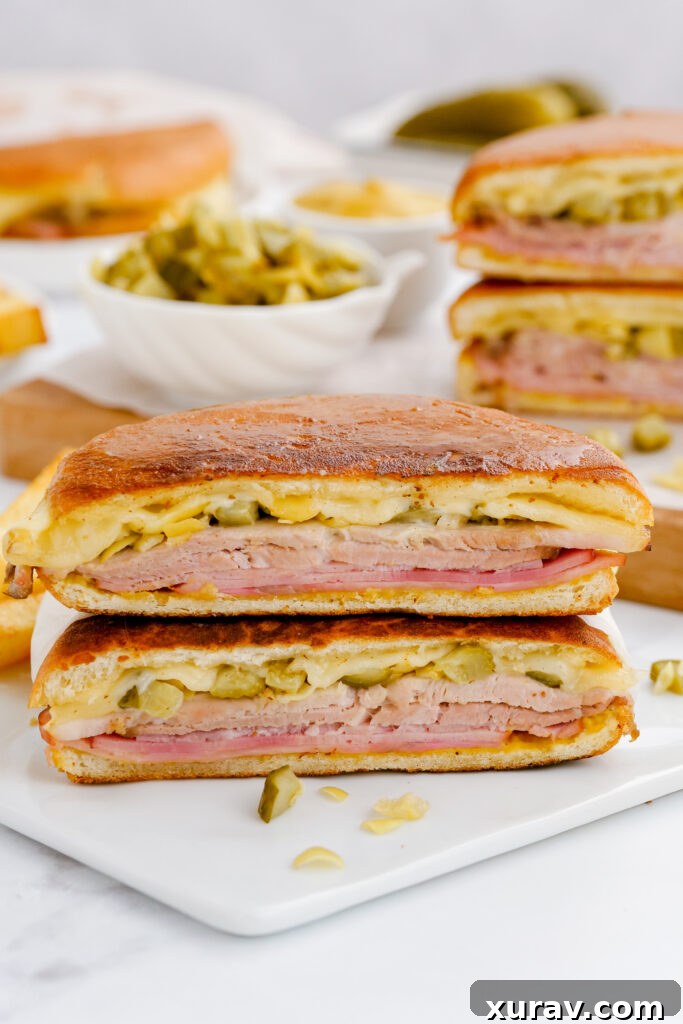
Crafting Your Own Cubano: A Step-by-Step Guide
Making a Cuban sandwich at home is surprisingly straightforward once you have your quality ingredients prepped and ready. The true artistry lies in the layering, creating a symphony of bold, distinct, and utterly delicious flavors that will have you reaching for another bite. The combination of saltiness, savoriness, tang, and creaminess, all brought together by the pressing and heating process, is what makes the Cubano so irresistible.
A Quick Note on Variations: If you’re aiming for a “Tampa style” Cubano, tradition dictates adding a thin slice of Genoa salami to the layers. This adds an extra layer of cured, spicy flavor. For a more classic Miami or Key West style, stick to the ham and roast pork.
Step One: The Foundation of Flavor – Spreads
Begin by preparing your bread. If your rolls aren’t already sliced, cut them horizontally, being careful not to cut all the way through if you prefer a hinge. This is where the flavor foundation is laid. Generously spread yellow mustard on the bottom half of the bun and a luscious layer of mayonnaise on the top half. This thoughtful placement ensures a balanced distribution of their distinct flavors in every bite.
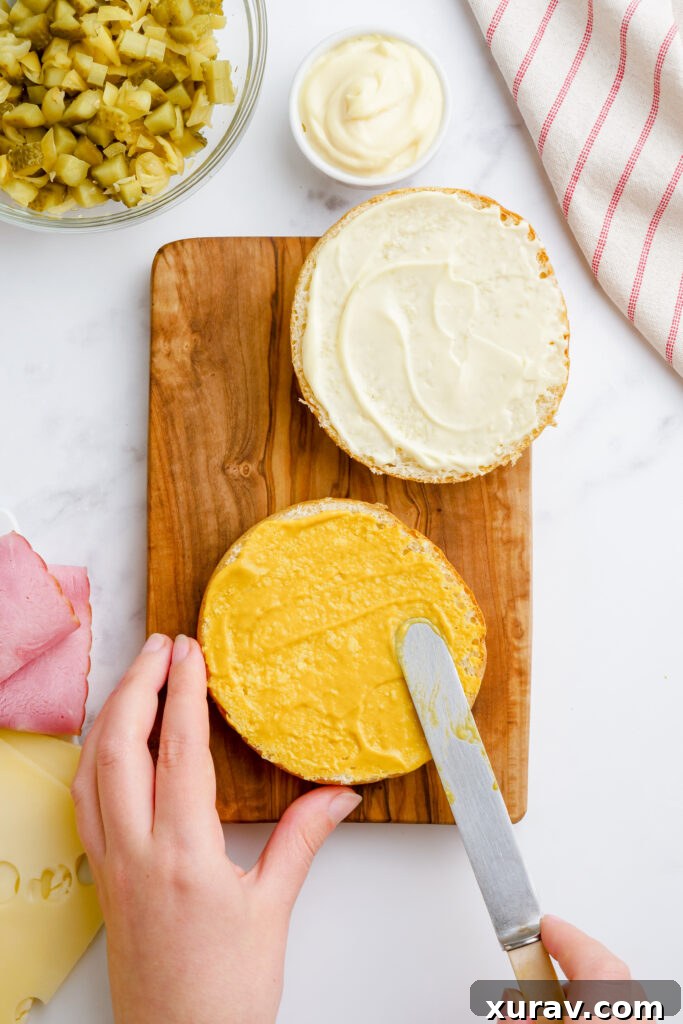
Step Two: Meaty Layers of Delight – Ham and Roast Pork
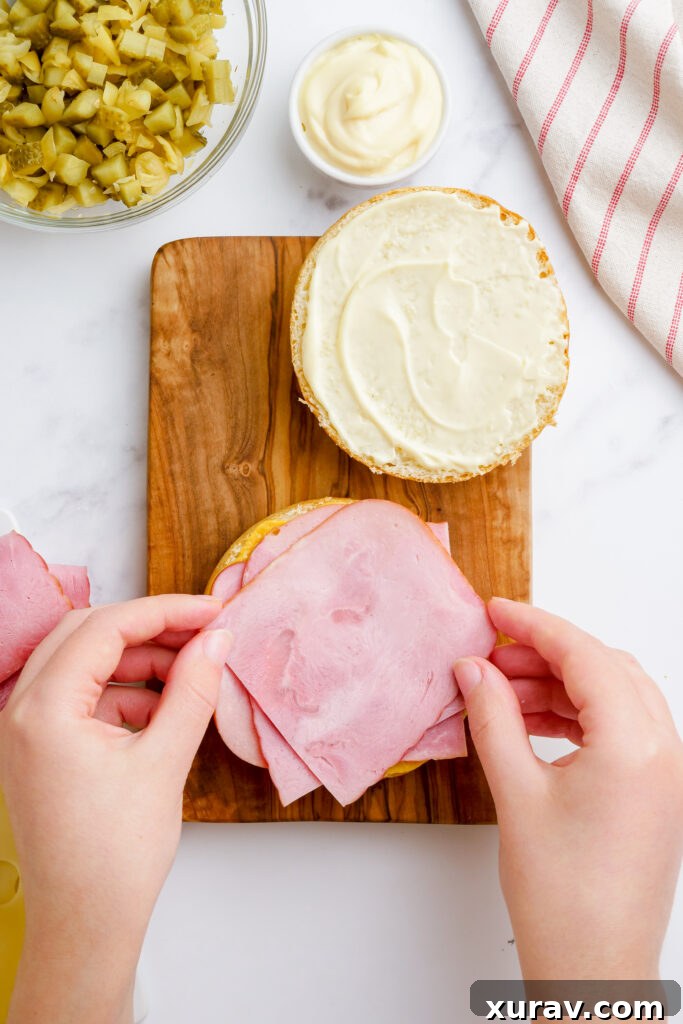
On top of the mustard-coated bottom bun, arrange your thinly sliced ham, followed by the equally thin slices of cold roast pork. The order of these meats can sometimes spark debate among Cubano enthusiasts. Some prefer to place the pickle mixture between the ham and pork layers. However, I find that placing the pickle mixture on top of the meats allows the melting Swiss cheese to gracefully envelop and bind everything together, creating a more cohesive and deliciously messy bite. Feel free to adjust this layering to your personal preference.
Step Three: The Tangy Heart and Cheesy Embrace – Pickles, Peppers, and Swiss
In a small bowl, combine your finely diced dill pickles and banana peppers. This mixture creates a vibrant, tangy layer that beautifully cuts through the richness of the meats. Spoon this zesty pickle and pepper blend generously over the ham and roast pork. Immediately follow this with a generous blanket of thinly sliced Swiss cheese, ensuring good coverage. As the sandwich cooks, this cheese will melt into all the nooks and crannies, holding the ingredients in perfect harmony.
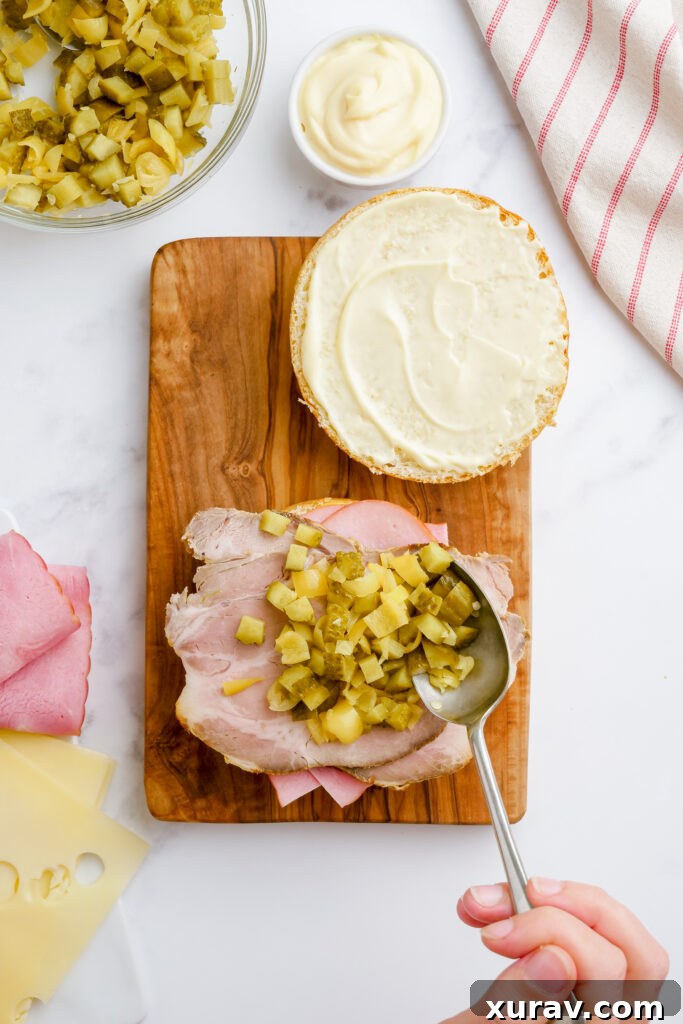
Step Four: Prepare for Pressing – The Butter Brush
With all your delicious layers assembled and the top bun gently placed, it’s time for the crucial step that transforms this stack of ingredients into a truly special sandwich. Before pressing, take your melted unsalted butter and generously brush it over the entire top surface of the sandwich. This butter will not only contribute to a beautiful golden-brown crust but also aid in the crisping process.
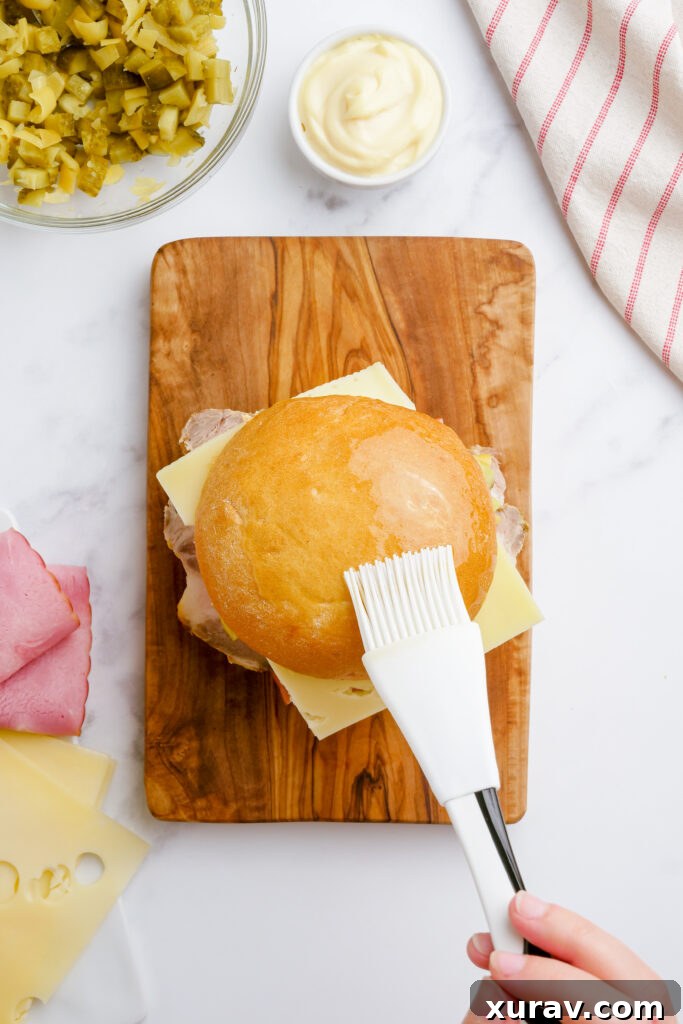
Step Five: The Grand Finale – Heat and Press
Your magnificent sandwich is now ready for its transformation. While you could technically enjoy it cold, the real magic of a Cubano unfolds when it’s heated and pressed. This process not only melts the cheese into gooey perfection but also fuses all the flavors and creates that signature crispy exterior. Place your butter-brushed sandwich into a preheated sandwich press (like a panini press) or into a large, heavy skillet. If using a skillet, you’ll need to apply pressure from above.
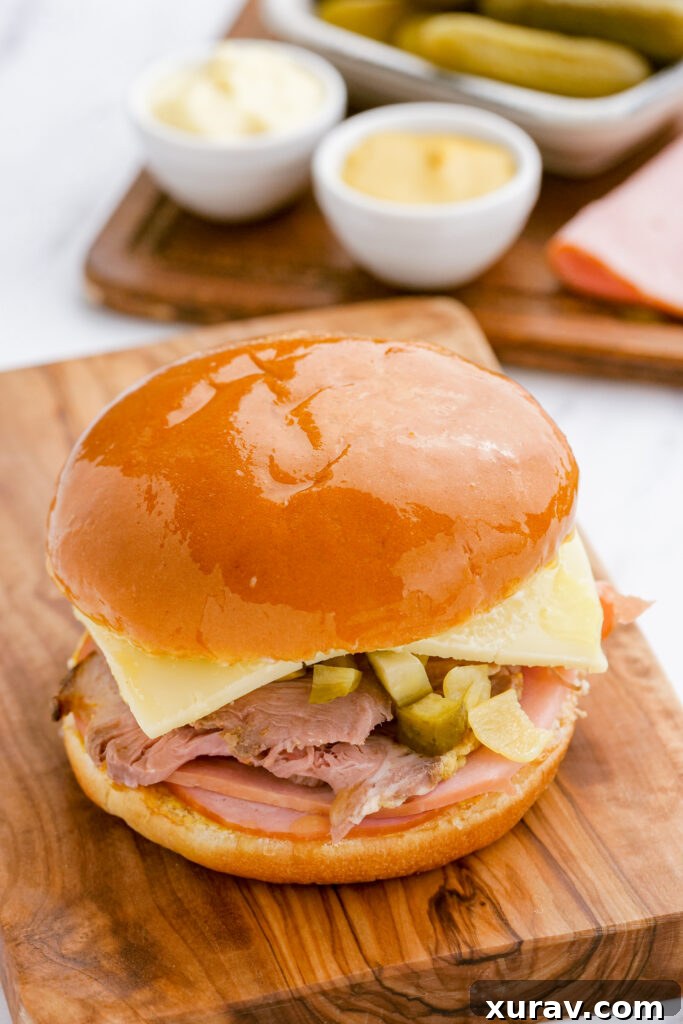
No Panini Press? No Problem! Master the DIY Press Method
Cuban sandwiches are traditionally cooked on a specialized plancha or panini press, which simultaneously heats and compresses all the wonderful layers, resulting in that iconic flattened shape and flavor explosion in every bite. However, the absence of a dedicated panini press should absolutely not deter you from experiencing the joy of a homemade Cubano. There are several effective ways to achieve the same delicious results using everyday kitchen items.
My preferred method involves using two heavy cast iron skillets or a cast iron skillet and a heavy pot (like a Dutch oven). Here’s how to do it:
- Preheat Your “Press”: Place one heavy cast iron skillet on a burner over medium-low heat for at least 4-5 minutes. Simultaneously, if using a second skillet or a Dutch oven, place it on a separate burner over medium-low heat to get it warm as well. The goal is for both surfaces that will touch the sandwich to be hot.
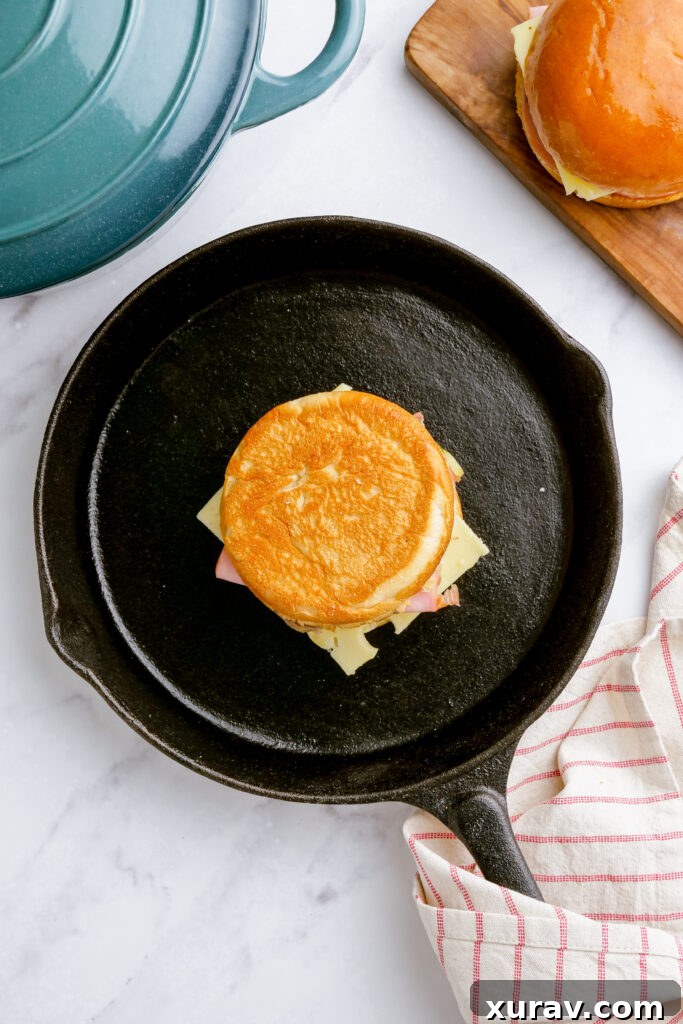
- Butter and Place: Brush the tops of your assembled sandwiches with melted butter. Carefully place them, buttered side down, into the preheated skillet on the stovetop.
- Apply Pressure: Now, brush the visible top halves of the sandwiches with the remaining melted butter. Take your second preheated heavy cast iron skillet or Dutch oven and carefully place it directly on top of the sandwiches. Press down firmly for about 15-20 seconds. This initial press helps to flatten and compact the sandwich significantly.
- Cook and Continue Pressing: Leave the heavy pot or skillet on top of the sandwiches (you don’t need to continue actively pressing after the initial flattening). Cook the first side for 4 to 5 minutes, or until it’s beautifully golden brown and crispy.
- Flip and Finish: Carefully remove the top pot/skillet. Using a spatula, gently flip the sandwiches over. Replace the hot pot/skillet on top of the sandwiches and cook for another 3 to 4 minutes, or until the second side is also golden brown and the cheese is thoroughly melted and gooey.
Other Ingenious Pressing Alternatives:
- Foil-Wrapped Brick: Wrap a clean brick in heavy-duty aluminum foil. Heat it in a warm oven or directly on a clean skillet before placing it on top of your sandwich in another hot skillet.
- Burger Press or Bacon Press: These tools are designed to apply even pressure and work wonderfully in a hot skillet.
- Any Heavy, Heat-Safe Object: Get creative! A sturdy pie plate weighted down with canned goods, or even another heavy pan can work. Just ensure it’s heat-safe and can apply even pressure.
The key is to apply consistent heat and pressure. This transforms the bread into a crisp shell and melds all the internal ingredients into a cohesive, flavorful unit. Do not let the lack of a specialized panini press stand between you and this incredible sandwich!
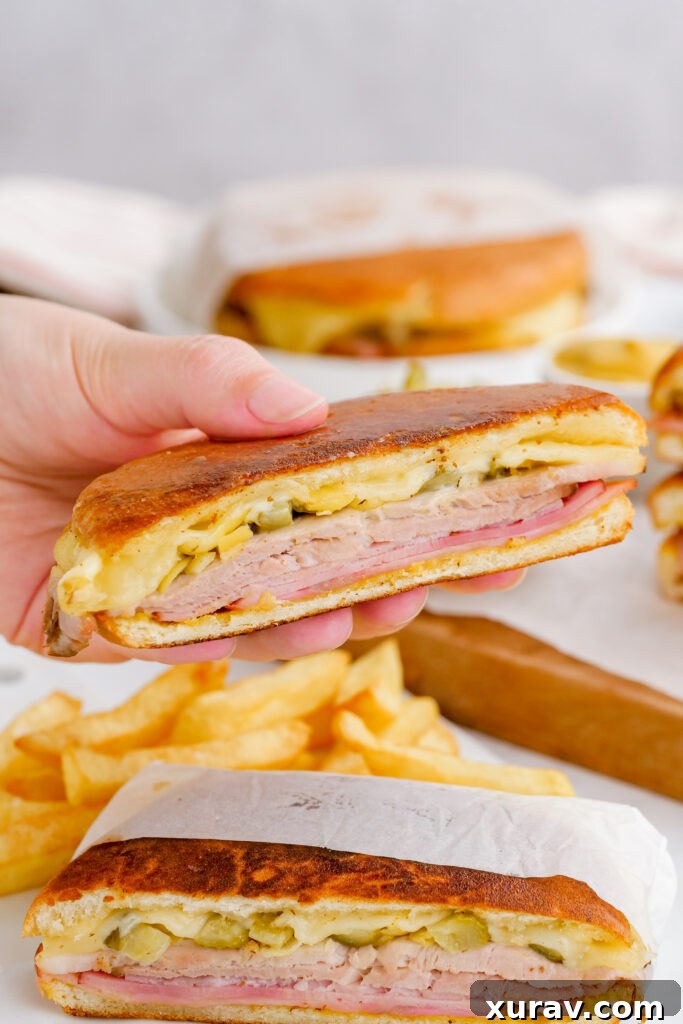
Once both sides of your Cubano are beautifully golden brown, nicely toasted, and perfectly flattened, remove it from the heat. Allow it to rest for just a moment before slicing it diagonally in half. This diagonal cut not only looks appealing but also makes for easier eating and showcases all those delightful layers. Serve warm and prepare for an explosion of flavor!
Perfect Pairings: What to Serve with Your Cubano
The Cuban sandwich is incredibly satisfying on its own, but pairing it with the right side dishes can elevate your meal to a new level. Its rich, savory flavors and crunchy texture make it a versatile partner for a variety of accompaniments. This recipe is perfect for a vibrant park lunch, a quick weeknight dinner, or even a casual gathering. Here are some of my favorite pairings:
- Classic Mustard Potato Salad: The creamy, tangy notes of a good potato salad are a timeless match for hearty sandwiches.
- Coleslaw: A crisp, refreshing coleslaw provides a cool, crunchy contrast to the warm, savory Cubano.
- Homemade Lemonade: A sweet and tart lemonade is the perfect refreshing beverage to cut through the richness of the sandwich.
- Eclair Ice Box Cake: For a sweet ending, this delightful no-bake dessert offers a creamy, chocolatey finish that complements the savory meal beautifully.
- Traditional Cuban Sides: For an even more authentic experience, consider serving your Cubano with crispy plantain chips (mariquitas), a side of black beans and rice, or some perfectly fried yuca fries.
Tips and Tricks for Cubano Perfection
Making this delicious Cuban sandwich is Eazy Peazy with these helpful tips:
- Tip One: Quality Ingredients Yield Superior Results
Since the Cubano is a relatively simple assembly of ingredients, the quality of each component truly shines through. Investing in premium deli ham, well-seasoned roast pork, sharp Swiss cheese, and flavorful pickles will make a significant difference in the final taste. Choose your favorite brands and the highest quality produce you can find for the best possible outcome. - Tip Two: The Art of Preparation – Gather First
The assembly and cooking process for a Cubano is quite quick once you start. To prevent any ingredients from getting soggy or to ensure a smooth workflow, prepare and arrange all your components before you begin layering. Slice your meats, dice your pickles and peppers, and have your spreads ready. This “mise en place” approach ensures that while your pans or press are heating, you can swiftly assemble the sandwich, leading to a perfectly crisp and cohesive result. - Tip Three: Elevate Your Pork – Make Your Own
While store-bought roasted pork offers incredible convenience, making your own roast pork from scratch can take your Cubano to the next level. If you choose to roast your own pork, aim for an internal temperature of 145 degrees F for optimal tenderness and juiciness. Season it generously with a classic mojo marinade (citrus, garlic, oregano, cumin) for that authentic Cuban flavor. - Tip Four: Personalize Your Palate – Customize Freely
Cooking is all about personal preference, and the Cuban sandwich is no exception. I’ve experimented with various pickle types, from sweet and hot to classic dill and even bread and butter pickles. Each variation subtly alters the flavor profile, offering a fun way to customize your sandwich. Don’t be afraid to mix things up with different types of mustards, or even a touch of hot sauce in your mayo. Make it your own! - Tip Five: Slice Meats Thin for Maximum Impact
For the most flavorful and texturally pleasing Cuban sandwich, slice your ham and roast pork as thinly as possible. Deli-sliced meats are ideal. Thin slices ensure that each layer contributes to the overall flavor without dominating, and they heat through more evenly, allowing the cheese to bind everything together perfectly. Slicing cold meats is generally easier and yields cleaner, thinner slices. - Tip Six: Don’t Over-Press
While pressing is essential for a Cubano, avoid over-pressing to the point where the sandwich becomes completely flat and all the juices are squeezed out. The goal is a compact, cohesive sandwich with a crispy exterior and a still-juicy interior. A good press should reduce its height by about half, creating a firm, toasted package.
The Rich History: Where Did the Cuban Sandwich Originate?
The Cuban sandwich, or “Cubano,” carries a history as rich and layered as its flavors. As its name suggests, this iconic sandwich traces its roots back to Cuba, but its true rise to fame and its characteristic form largely developed in the United States. It’s widely believed that the Cubano was brought to Florida by Cuban immigrant workers in the late 19th and early 20th centuries, particularly those employed in the cigar factories of Key West and Tampa.
These workers needed a hearty, portable, and delicious meal that could be easily prepared and sustain them through long shifts. The Cuban sandwich fit the bill perfectly, offering a substantial and flavorful meal that was ideal for taking to the factory. Over time, the sandwich evolved and became deeply ingrained in the local culture, eventually becoming an unofficial culinary symbol of both Tampa and Miami.
The Great Debate: Tampa vs. Miami
The history of the Cuban sandwich is often marked by a friendly rivalry between Tampa and Miami over which city perfected the Cubano. The key difference lies in one controversial ingredient: salami.
- Tampa-Style Cubano: Historically, the Tampa version includes a layer of Genoa salami, in addition to the roast pork and ham. This addition is attributed to the influence of Italian immigrants who also worked in Tampa’s cigar factories, bringing their culinary traditions to the mix. The bread in Tampa is also typically brushed with butter before pressing.
- Miami-Style Cubano: Miami purists contend that a true Cuban sandwich consists only of Cuban bread, mustard, roast pork, ham, Swiss cheese, and dill pickles – no salami. They argue that the simplicity highlights the quality of the core ingredients.
Beyond these two major styles, other regional variations exist. For example, some “Key West” versions, sometimes called a “mixto,” might include additional fillings like lettuce, tomato, or even butter on the inside of the bread. While these additions offer different experiences, I generally prefer the classic, unadorned version, allowing the traditional flavors to truly shine. Ultimately, the “best” Cuban sandwich often comes down to personal preference.
Make Ahead and Storage Tips for Your Cubano
While the Cuban sandwich is truly at its peak when enjoyed fresh off the panini press, hot and crispy, its historical origins reveal a practical side. It was originally conceived as a robust meal that could hold up well throughout a workday. This means it can certainly be made slightly ahead of time, especially if you use a crusty bread that will resist sogginess.
However, the Cubano is not a sandwich that benefits from being made too far in advance, nor is it ideal for freezing and reheating. The key to its deliciousness is that fresh, hot, pressed texture. For the best experience, I recommend preparing and assembling the ingredients ahead of time, but saving the final pressing and heating for just before serving. For example, you can slice your ham and roast pork, prepare your pickle and pepper mixture, and have your cheese ready. Then, when hunger strikes, simply assemble, press, and enjoy a warm, irresistible Cubano.
If you have any leftovers (which is rare!), store the pressed sandwiches wrapped tightly in foil or an airtight container in the refrigerator for up to 1-2 days. To reheat, a panini press or a dry skillet on medium-low heat is best, allowing the bread to crisp up again without drying out the interior. Avoid microwaving, as it will make the bread soggy.
More Delicious Sandwich Recipes to Explore:
If you loved crafting this Cubano, you’ll surely enjoy these other fantastic sandwich recipes:
- Easy Chicken Club Sandwich
- Homemade Sandwich Bread
- Fried Egg and Avocado BLT with Cheese
- Classic Italian Hero Sandwich
- Easy Slow Cooker French Dip Sandwiches
WANT MORE EZPZ? Subscribe to my newsletter and follow along on Facebook, Pinterest and Instagram for all of the latest updates.
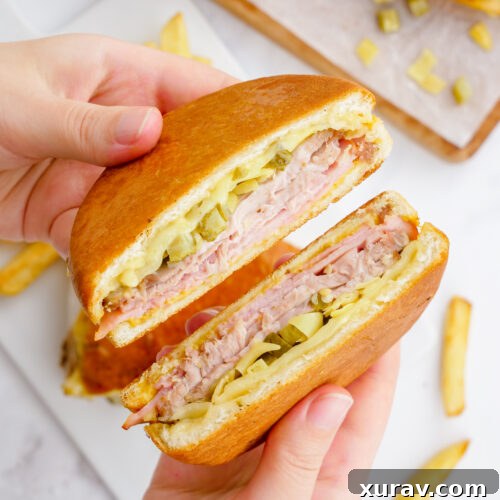
Cuban Sandwich
Delicious layers of ham, roast pork, pickles, and Swiss cheese combine to make a classic Cubano sandwich that is loaded with awesome flavor.
Servings: 4
Calories: 492 kcal
Author: Rachael
Print Recipe | Pin Recipe | Rate this Recipe
Ingredients
- ⅓ cup dill pickles, diced
- ⅓ cup banana peppers, diced
- 4 potato sandwich rolls
- 2 tablespoons mayonnaise
- 1 ½ tablespoons yellow mustard
- ¼ pound deli ham, sliced thin
- ½ pound cold roast pork, sliced thin
- ¼ pound Swiss cheese, sliced thin
- 3 tablespoons unsalted butter, melted
Instructions
- Combine the pickles and peppers in a small bowl. Set aside.
- If not pre-sliced, slice the rolls in half and spread the top half with mayonnaise and the bottom half with mustard.
- Layer ham, roast pork, pickle mixture, and Swiss cheese on top, in that order. Or, place pickle mixture between the ham and the roast pork.
- Place the tops of the rolls over everything and use your hand to press down to flatten the sandwiches.
- Heat a large nonstick skillet over medium-low heat for 4 minutes. Meanwhile, heat a large pot or Dutch oven on a separate burner over medium-low heat for 4 minutes. (Alternatively, preheat a panini press.)
- Brush the tops of the sandwiches with melted butter and place them in the heated skillet, buttered side down. Brush the bottom rolls with the remaining butter. Use the preheated Dutch oven to press down on the sandwiches for 15 to 20 seconds; this acts as a sandwich press. Be sure to use hot pads to protect your hands. After the initial 15-20 seconds, stop pressing but leave the pot on top of the sandwich.
- Cook until the first side is golden brown, 4 to 5 minutes. Remove the pot, flip the sandwiches over, replace the pot on top, and cook until the other side is also golden brown, another 3 to 4 minutes.
- Remove from pan, slice in half, and serve warm!
Notes
Cubanos are traditionally cooked under a heavy cast iron sandwich press. The press will compress the sandwich while heating it. If you don’t have one, to get the effects of a press, place the sandwich in a cast iron skillet and weigh it down with a preheated heavy Dutch oven.
Tips: If slicing your own pork, ensure it’s in very thin slices for maximum impact. Slicing straight from the fridge often makes this easier. Cubanos are traditionally made with Cuban bread, so if you can find it, use it in place of the potato sandwich rolls for an authentic touch.
Nutrition
Calories: 492kcal | Carbohydrates: 25g | Protein: 29g | Fat: 32g | Saturated Fat: 14g | Polyunsaturated Fat: 5g | Monounsaturated Fat: 9g | Trans Fat: 0.4g | Cholesterol: 93mg | Sodium: 800mg | Potassium: 271mg | Fiber: 2g | Sugar: 5g | Vitamin A: 565IU | Vitamin C: 9mg | Calcium: 424mg | Iron: 3mg
Our recipe card software calculates these nutrition facts based on averages for the above ingredients. Different brands, and quality of produce/meats may have different nutritional information. Always calculate your own based on the specific products you use in order to achieve accurate macros for this recipe.
Tried this recipe? Mention @ezpzmealz or tag #ezpzmealz!
Want to use this recipe in a meal plan? Try PrePear, my FREE Meal Planning App that allows you to save your recipes, plan meals, shop for groceries, and cook simply in one place. Join Here!
Pin to your Sandwich board on Pinterest: