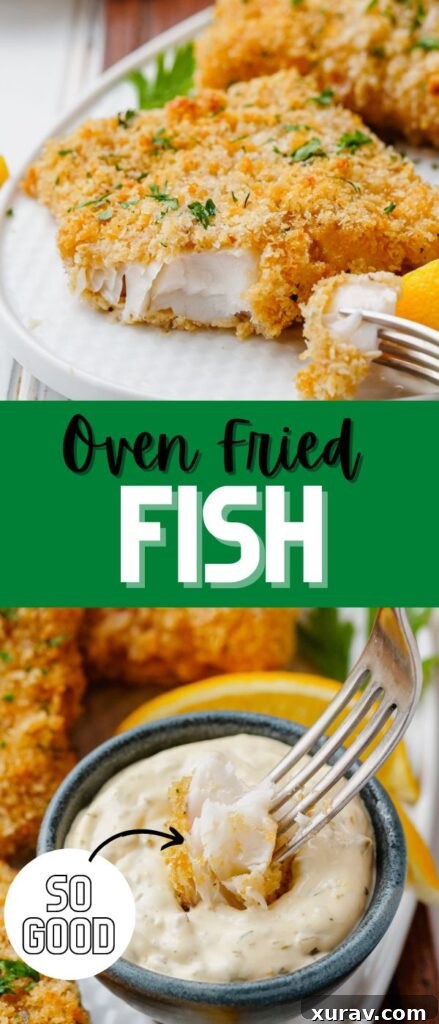
Achieve Crispy Perfection: The Ultimate Oven-Fried Fish Recipe
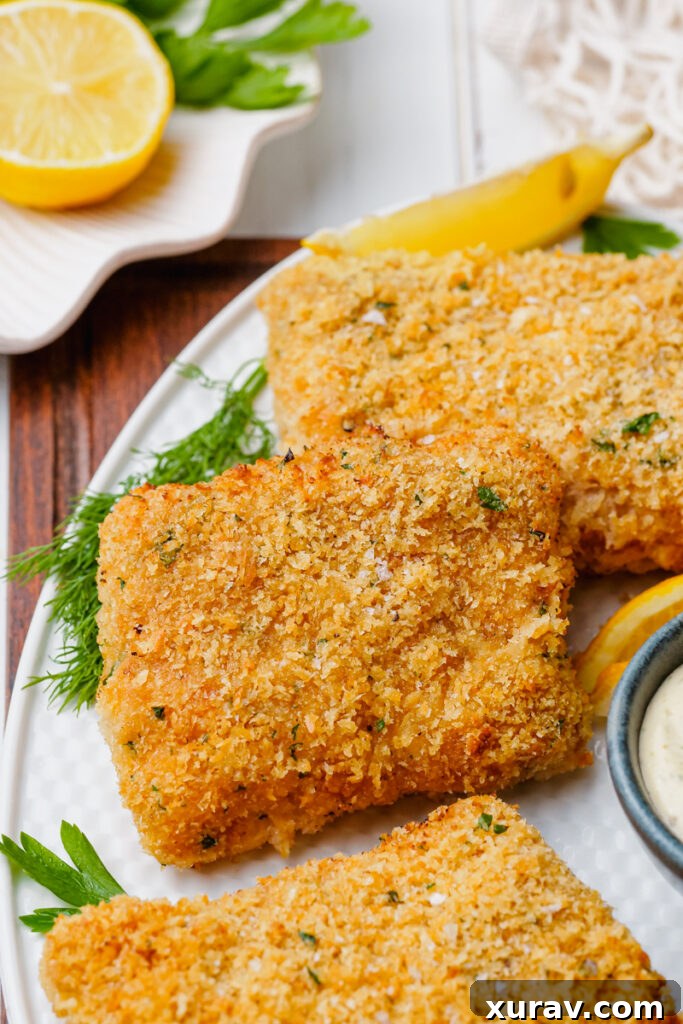
Are you yearning for that irresistible crunch of fried fish without the guilt and mess of deep-frying? Look no further! This Oven-Fried Fish recipe delivers an astonishingly crispy exterior and a succulent, tender, and flaky interior that will revolutionize your dinner table. Forget bland, store-bought fish sticks or oil-laden breaded fish; our foolproof method yields results so exceptional, you might just believe it came straight from a fryer. With a few smart techniques and common ingredients, you’ll be enjoying a healthier, equally delicious alternative that’s bound to impress.
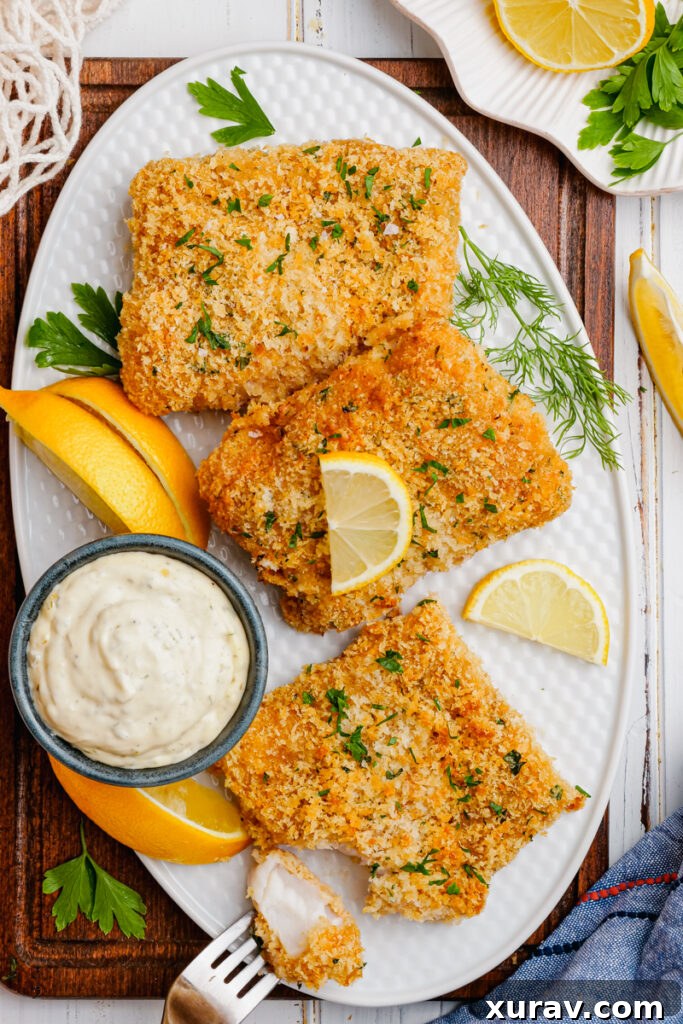
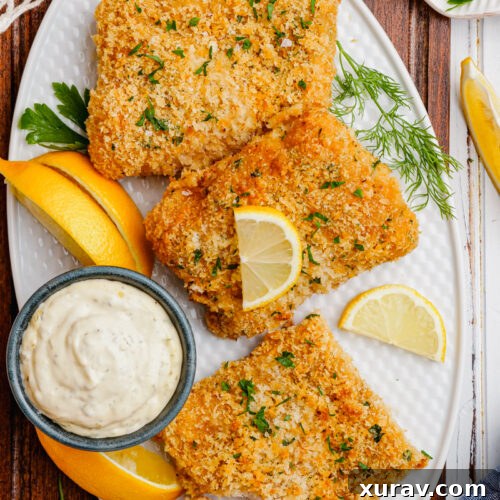
Transform your meal into a classic “fish and chips” experience by serving this incredible oven-fried fish with Homemade Tartar Sauce and golden Air Fryer Fries or Oven Baked Steak Fries. It’s comfort food, reimagined for modern, health-conscious palates.
Why You’ll Love This Crispy Oven-Baked Fish Recipe
For years, home cooks have sought ways to achieve deep-fried textures without the associated drawbacks. My journey into “oven-fried” everything has led to perfected recipes that deliver on that promise. From Oven Fried Chicken to Crispy Oven Baked Shrimp and Crispy Oven Baked Chicken Wings, the principle remains the same: create an illusion of deep-frying using clever oven techniques. This baked breaded fish recipe is no exception, providing a batter-like coating without the hassle and unhealthy oils. Here’s what makes this recipe a must-try:
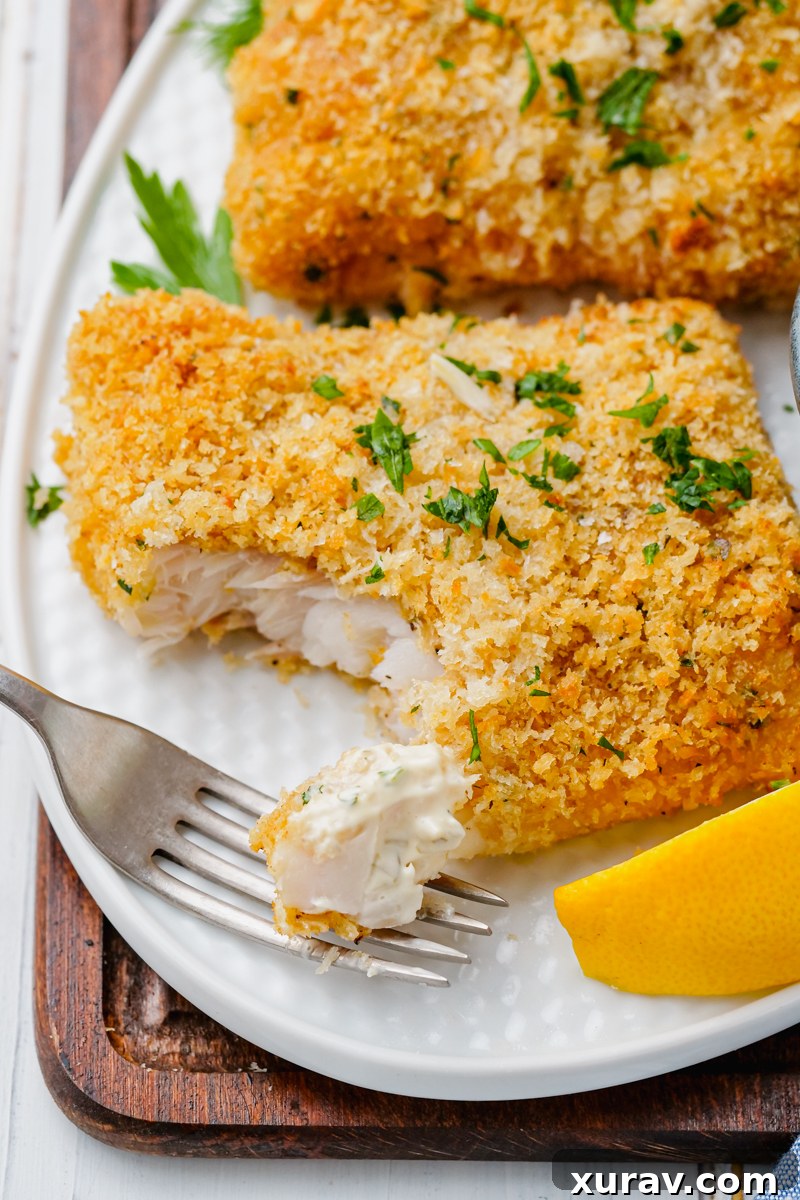
- Flaky, Juicy, and Tender Fish: Say goodbye to dry, overcooked fish. This method ensures your white fish remains incredibly moist, flaky, and tender on the inside, perfectly contrasting with its golden, crispy crust. It’s the ideal texture combination every time.
- Remarkably Easy to Make: While there are a few simple dredging steps involved, the overall process is straightforward. A key trick lies in pre-baking the breadcrumb mixture, giving you a head start on that coveted crispiness without the risk of overcooking your delicate fish. This innovative approach simplifies the process significantly.
- Incredibly Versatile: This recipe is highly adaptable. You can use virtually any firm, thick white fish you have on hand, and the robust seasoning complements, rather than overpowers, the natural flavors of the fish. It’s a clean, flavorful profile that allows the star ingredient to shine.
- A Healthier Indulgence: By opting for oven-baking instead of deep-frying, you significantly reduce the fat content without sacrificing flavor or texture. Paired with homemade tartar sauce and oven-baked fries, this recipe offers a much healthier, yet equally satisfying, homemade version of a classic fish and chips meal. It’s a guilt-free way to enjoy a beloved comfort food.
Essential Ingredients for Perfect Oven Fried Fish
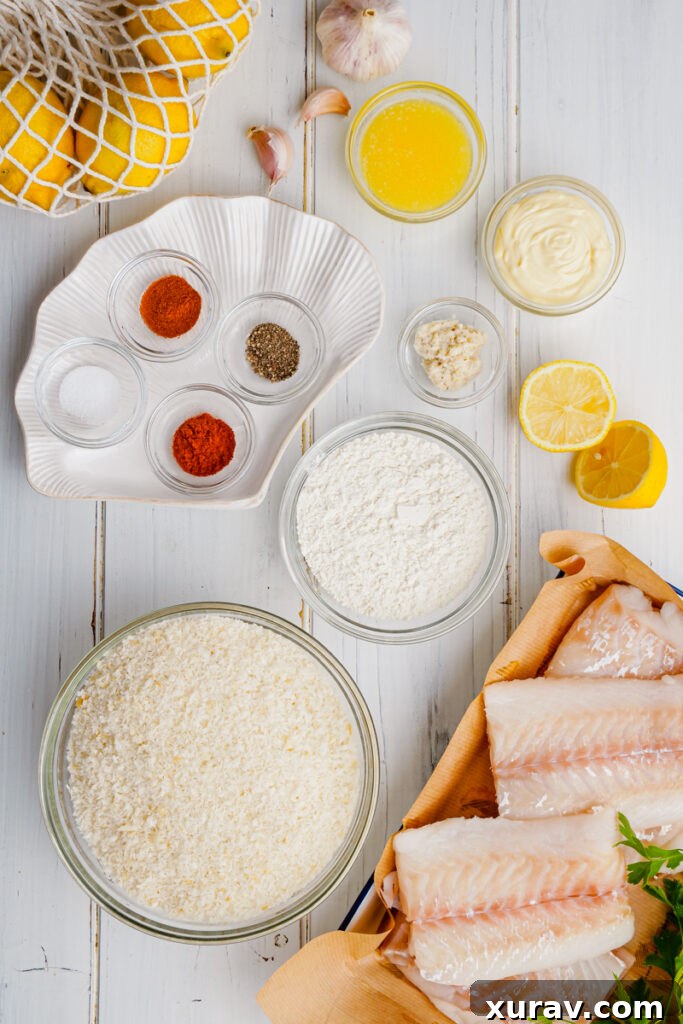
Crafting the perfect oven-fried fish begins with selecting the right ingredients. Here’s a detailed look at what you’ll need and why each component is crucial:
- White Fish Fillets: Opt for firm, thick fillets like Cod, Haddock, or Halibut. Skinless is preferred for the best breading adhesion.
- Panko Breadcrumbs: The secret to extreme crispiness. Panko’s larger, flakier structure provides a superior crunch compared to regular breadcrumbs.
- Unsalted Butter: Mixed with the panko, butter adds rich flavor and helps the breadcrumbs crisp up beautifully to a golden hue.
- Fresh Parsley & Minced Garlic: These aromatic additions infuse the breading with fresh, herbaceous notes.
- All-Purpose Flour: Forms the initial dry layer for the breading, helping the egg mixture adhere better.
- Seasonings: A blend of Paprika, Cayenne pepper, Salt, and Black Pepper provides warmth, a touch of heat, and savory depth.
- Large Eggs: The binding agent that ensures the breading sticks firmly to the fish.
- Mayonnaise & Prepared Horseradish: Whisked into the egg mixture, these ingredients add a subtle tang and moisture, enhancing both flavor and the breading’s adherence.
- Lemon Wedges: An essential garnish for serving, providing a bright, acidic counterpoint to the rich fish.
Ingredient Deep Dive and Substitutions:
Let’s elaborate on some key ingredients for optimal results:
Choosing Your Fish: The foundation of this dish is a high-quality white fish. For this recipe, aim for a firm, thick, and mild-flavored fillet. Skinless varieties work best for uniform breading. While thinner fillets like Tilapia can be used, they cook much faster and tend to be less juicy. Therefore, I highly recommend Cod, Haddock, or Halibut. These species offer a desirable density, flakiness, and mild taste that truly shines in this preparation. They are excellent choices for fish and chips and hold up well to the breading and baking process without falling apart.
The Magic of Panko: Panko breadcrumbs are not interchangeable with regular breadcrumbs. Their distinct large, airy, and flaky texture is what creates that incredibly light and crispy coating. When combined with the pre-baking method, Panko transforms into a golden, crunchy crust that rivals deep-frying. Don’t skip this ingredient for best results!
Flavorful Seasoning Blend: My go-to seasoning for the flour mixture includes salt, pepper, paprika, and cayenne pepper, providing a balanced flavor profile with a gentle kick. The breading mixture also gets a boost from garlic and fresh parsley. For those who enjoy a different spice blend, consider substituting the paprika and cayenne with Old Bay Seasoning for a classic seafood flavor. The beauty is in its adaptability!
The Role of Fat: While we’re avoiding deep-frying, a touch of fat is essential for both flavor and achieving that perfectly crisp coating. Melting butter and mixing it with the Panko breadcrumbs before pre-baking provides richness and ensures a beautiful golden-brown finish. If you prefer a leaner option, you can substitute vegetable oil for butter or simply spray the fish generously with cooking spray before baking. Keep in mind, however, that butter yields a superior crispness and depth of flavor.
Which Fish is Best for Oven-Frying?
When selecting the ideal fish for oven-frying, consider these characteristics:
- Sturdiness: Choose a white fish that won’t easily fall apart during breading and baking.
- Thickness: Thicker fillets retain moisture better and offer a more satisfying texture. Aim for 1 to 1.5 inches thick.
- Mild Flavor: A mild fish allows the seasoned breading to complement its natural taste without being overwhelmed.
- Flaky, White Flesh: This indicates a desirable texture when cooked.
As mentioned, Cod and Haddock are top contenders and frequently used in traditional fish and chips. Cod comes in Atlantic and Pacific varieties, both excellent for this recipe. Haddock and Whiting, belonging to the same family, are also great alternatives often labeled as cod in markets. They offer similar mild flavors and flaky textures. While more expensive, Halibut is another fantastic option due to its firm flesh and delicate flavor. Always prioritize fresh, high-quality fillets from a reputable source for the best taste and texture.
If you’re a fish enthusiast looking for other delicious recipes, explore these options:
- Orange Coconut Truffle Sauce with Monchong
- Flounder Fish Tacos Recipe
- Asian Marinated Salmon
- Tilapia Fish Tacos
How to Make Perfect Oven-Fried Fish: A Step-by-Step Guide
Achieving truly crispy, oven-fried fish involves a few distinct steps, each contributing to the irresistible texture and flavor. Follow this guide for a flawless outcome:
Step One: Prepare Your Dredging Stations
The secret to a consistently crispy coating that doesn’t overcook the fish starts here. You’ll need three shallow dishes or bowls for your breading assembly line:
- Bread Coating Mixture: In a bowl, combine Panko breadcrumbs, melted unsalted butter, ¼ teaspoon salt, and ¼ teaspoon pepper. Stir thoroughly until the Panko is evenly coated. Spread this mixture onto a baking sheet and preheat your oven to 350°F (175°C). Bake for about 15 minutes, or until the Panko turns a beautiful golden brown and is fragrant. This pre-baking step is crucial as it “fries” the breadcrumbs, ensuring they are already crispy and flavorful before they even touch the fish. Remove from the oven, transfer to a shallow dish, and stir in the fresh minced parsley and garlic. Set aside.
- Flour Mixture: In a second shallow dish, whisk together ½ cup all-purpose flour, ½ teaspoon paprika, and ¼ teaspoon cayenne pepper. This seasoned flour provides the initial dry layer that allows the wet egg mixture to adhere properly. Set aside.
- Egg Mixture: In a third shallow dish, whisk two large eggs with 3 tablespoons of mayonnaise and 2 teaspoons of prepared horseradish until smooth and slightly frothy. The mayonnaise and horseradish not only add subtle flavor but also contribute to the richness and stickiness of the egg wash, helping the Panko adhere flawlessly. Set aside.
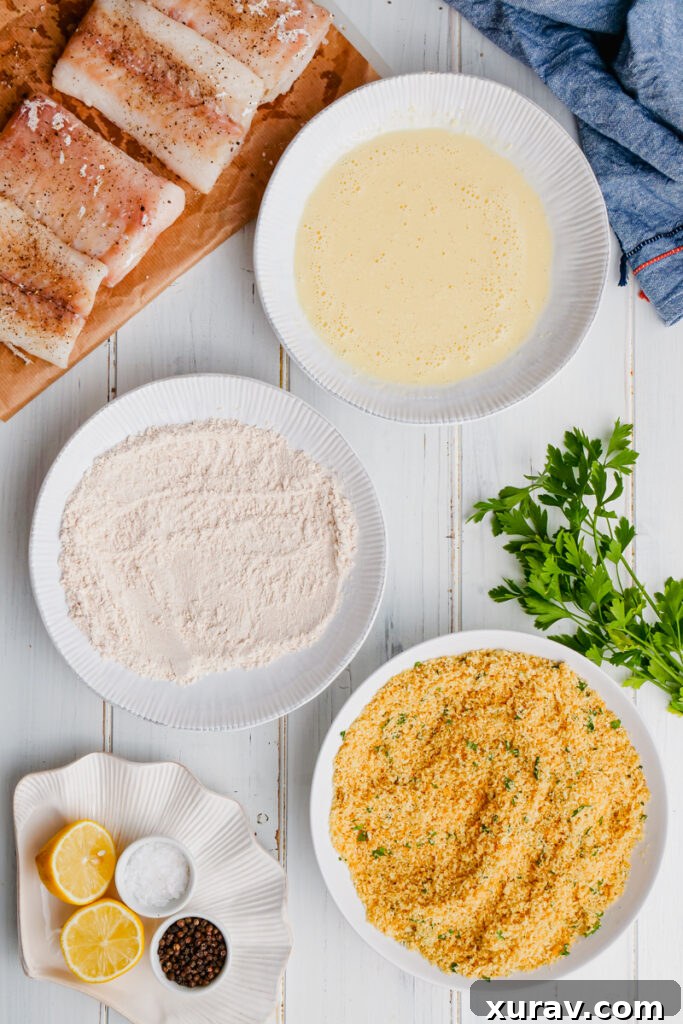
Step Two: Prepare and Dredge the Fish Fillets
Now that your dredging stations are ready, it’s time to coat your fish:
- Fish Preparation: Gently pat your fish fillets completely dry with paper towels. This is a critical step; excess moisture can prevent the breading from sticking and becoming crispy. Season both sides of the fish liberally with salt and pepper.
- Dredge in Flour: First, dredge each fish fillet in the seasoned flour mixture, ensuring it’s fully coated. Gently shake off any excess flour.
- Dip in Egg: Next, dip the flour-coated fish into the egg mixture, making sure both sides are thoroughly covered. Allow any excess egg to drip off.
- Coat in Panko: Finally, transfer the egg-coated fish to the pre-baked Panko breadcrumb mixture. Press the Panko firmly onto all sides of the fillet, ensuring a thick, even coating. This firm pressing helps the breading adhere during baking.
- Repeat: Place the breaded fillet on your prepared baking rack (see Step Three) and repeat the dredging process with the remaining fish pieces.
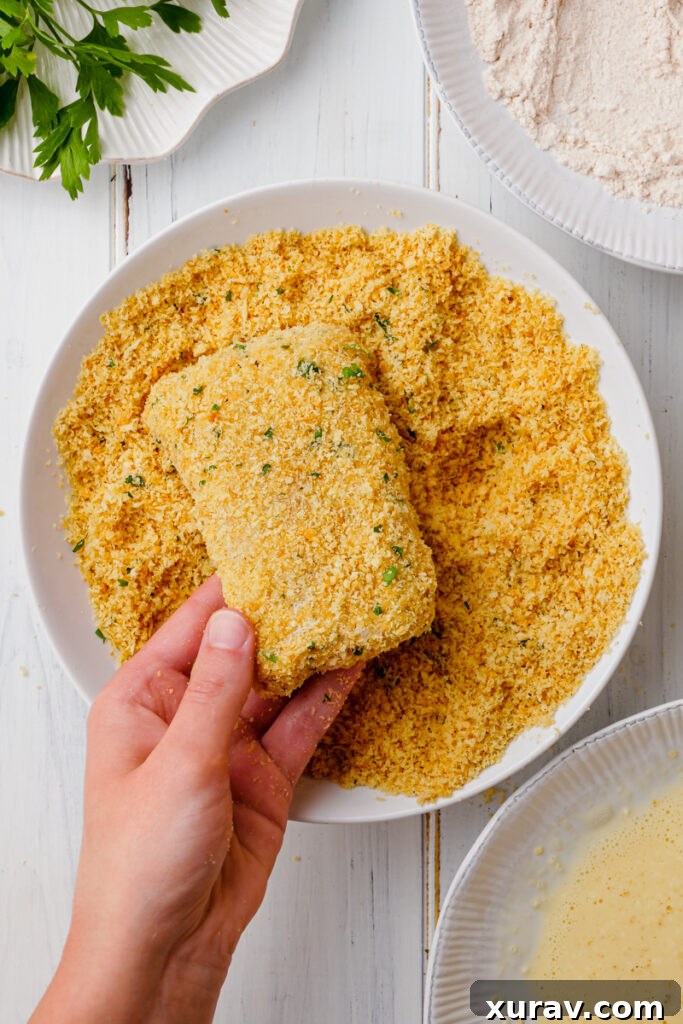
Step Three: Bake Your Fish to Golden Perfection
The final step brings it all together:
- Prepare Baking Setup: Line a rimmed baking sheet with a wire rack. This allows air to circulate completely around the fish, which is essential for achieving a uniformly crispy exterior. Spray the wire rack generously with non-stick cooking spray to prevent the coating from sticking. Increase your oven temperature to 425°F (220°C).
- Bake the Fish: Carefully place the breaded fish fillets on the prepared wire rack. Bake for approximately 18-25 minutes. The exact baking time will depend on the thickness of your fillets. The fish is done when it easily flakes apart with a fork and reaches an internal temperature of 140°F (60°C). Using an Instant Read Thermometer is the best way to ensure perfect doneness without overcooking, keeping the fish moist and tender.
- Serve Immediately: Once baked, remove the fish from the oven, transfer to serving plates, and serve hot with fresh lemon wedges and your favorite homemade tartar sauce.
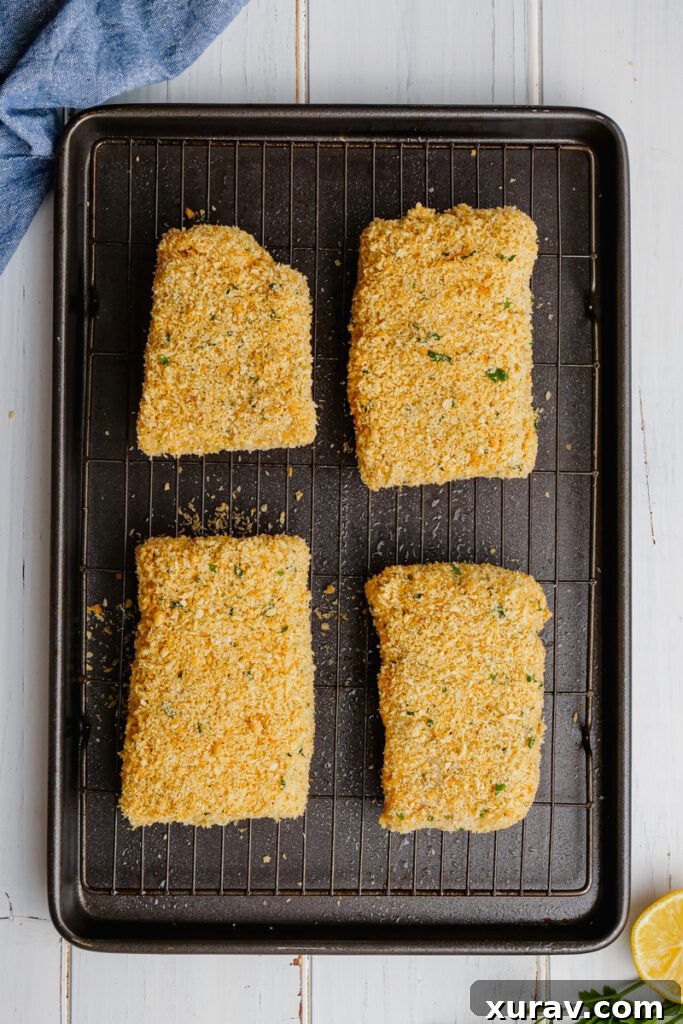
Expert Tips and Tricks for the Crispiest Oven Fried Fish
While this recipe is straightforward, a few key tips can elevate your oven-fried fish from good to extraordinary:
- Master the Battering Order: The sequence of dredging is paramount for adherence and crispiness. Always start with the seasoned flour, which creates a dry surface for the egg wash. The egg mixture then acts as the perfect adhesive for the pre-baked Panko breadcrumbs. This systematic approach prevents dry spots and ensures the Panko forms a robust, crispy crust that won’t fall off during baking.
- Utilize a Dark Baking Pan: Dark-colored baking sheets absorb heat more efficiently than light-colored ones. This extra heat transfer helps the bottom of the fish crisp up faster and achieve a deeper golden-brown color, contributing to that desirable all-around crunch.
- Allow the Fish to Rest (Briefly): After baking, transfer the fish from the hot pan to a clean plate or another wire rack for 3-4 minutes. This brief resting period allows the juices to redistribute, ensuring maximum tenderness. However, avoid letting it rest for too long, as the steam can soften the crispy coating. Serve immediately after resting for the best texture.
- Don’t Skimp on Patting Dry: This cannot be stressed enough. Any moisture on the fish surface will create a barrier, preventing the flour and subsequent coatings from sticking effectively. Use plenty of paper towels to ensure the fish is as dry as possible before seasoning.
- Avoid Overcrowding the Pan: When baking, ensure there is adequate space between each fish fillet on the wire rack. Overcrowding reduces air circulation, which can lead to steaming instead of crisping. Bake in batches if necessary.
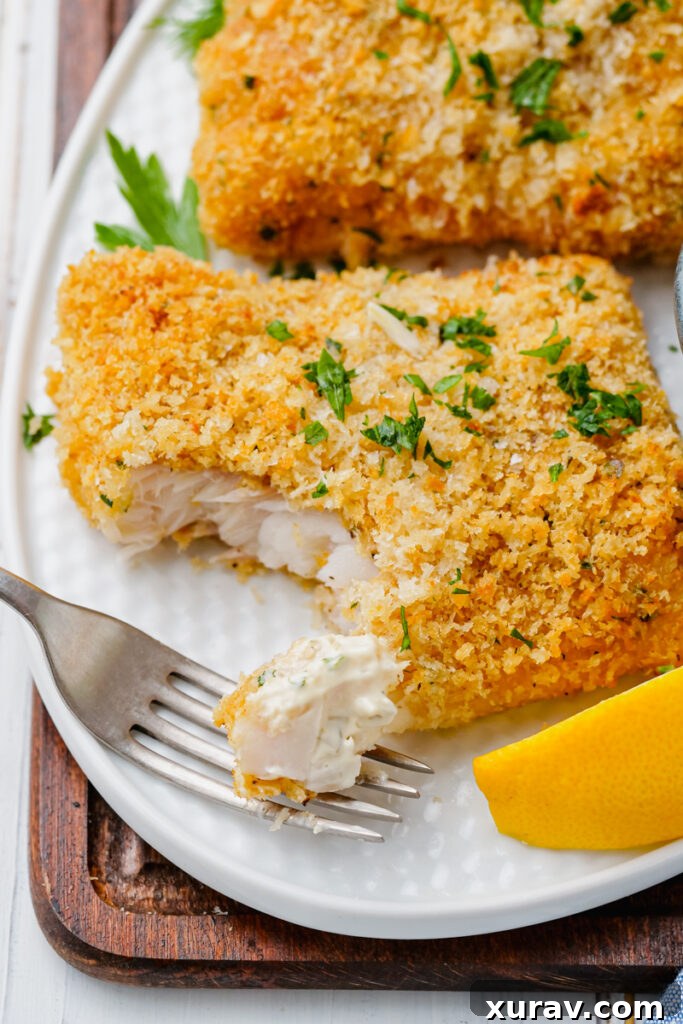
Make Ahead and Storage Guidelines
While oven-fried fish is undoubtedly best enjoyed fresh from the oven, there are ways to prepare it ahead and store leftovers. Understanding the nuances of storage and reheating will help you maintain as much of that delicious crispness as possible.
Preparing Ahead: If you’re looking to save time on the day of cooking, you can easily prepare the individual components of the dredging station in advance. The breading mixture (Panko, butter, seasonings, herbs, garlic) can be baked until golden brown and then stored in an airtight container at room temperature for up to 2 days. The seasoned flour mixture can also be prepared and stored. Whisk the egg, mayonnaise, and horseradish mixture just before breading to ensure freshness. This pre-assembly significantly reduces active prep time, allowing you to quickly dredge and bake when you’re ready to serve, ensuring the best possible texture.
Storing Leftovers: Cooked oven-fried fish will keep in the refrigerator for about 1-2 days. It’s important to note that the crispy coating will inevitably soften in the fridge due to moisture. For longer storage, if you have a substantial amount of leftovers, place the cooled fish in an airtight, freezer-safe container or freezer bag. It can be stored in the freezer for up to 1 month. As a general rule, oven-fried fish is at its peak quality when served fresh.
Reheating Leftovers: The microwave is not your friend when reheating oven-fried fish, as it will make the coating soggy. To best preserve the crispy, delicious exterior, always reheat in the oven or an air fryer.
- Oven Method: Preheat your oven to 350°F (175°C). While the oven preheats, let the fish come to room temperature on the counter for about 10-15 minutes; this helps it reheat more evenly. Place the fish fillets on a baking sheet (preferably on a wire rack for better circulation) and warm in the oven for 10-15 minutes, or until heated through. For an extra crisp boost, you can pop them under the broiler for an additional 2-3 minutes, watching carefully to prevent burning.
- Air Fryer Method: Preheat your air fryer to 350°F (175°C). Place the fish in a single layer in the air fryer basket, ensuring not to overcrowd it. Cook for 5-8 minutes, flipping halfway through, or until heated through and crispy.
Creative Recipe Variations and Substitutions
While this recipe is meticulously tested and perfect as is, it also serves as an excellent foundation for culinary creativity. Here are some exciting ways to adapt and customize your oven-fried fish:
- Explore Other Fish Species: Feel free to experiment with different types of white fish. Remember to adjust baking times and use an instant-read thermometer to ensure the fish cooks to its proper internal temperature (140-145°F or 60-63°C). Thinner fillets will cook faster, thicker ones longer.
- Panko Alternatives (for when you’re in a pinch): If Panko isn’t available, you can create a similar crunchy texture by mixing fine textured plain breadcrumbs with crushed cornflakes. Ensure you still pre-bake this mixture to get it nicely toasted and crispy before coating your fish.
- Transform into Homemade Fish Sticks: For a kid-friendly option or a fun appetizer, cut your chosen fish fillets into strips before breading and baking. You might need slightly more breadcrumb mixture to fully coat the increased surface area, so adjust quantities accordingly. Serve with dipping sauces!
- Boost the Buttery Flavor: For an extra rich and buttery coating, finely crush Ritz crackers and substitute some of the Panko breadcrumbs with them. The buttery notes from the crackers will infuse the crust with an irresistible richness.
- Make it Cheesy: Who doesn’t love cheese? For a delightful savory twist, stir in a few tablespoons of finely grated Parmesan cheese into your Panko mixture *after* it has been pre-baked but before coating the fish. The Parmesan adds a wonderfully salty, umami depth.
- Amp Up the Flavor: If you crave a bolder taste, consider adding a few dashes of your favorite hot sauce to the egg mixture, or replace the paprika and cayenne in the flour with a generous amount of Old Bay Seasoning for that classic seafood boil flavor. Smoked paprika can also add a richer, more complex smokiness.
- Herb Garden Freshness: Experiment with different fresh herbs. Finely chopped dill, chives, or a mix of Italian herbs can be added to the Panko mixture along with the parsley and garlic for varying aromatic profiles.
Frequently Asked Questions (FAQs)
Q: Can I use frozen fish fillets?
A: Yes, you can use frozen fish fillets, but it’s crucial to thaw them completely first. Pat them thoroughly dry with paper towels to remove all excess moisture. Any remaining ice crystals or water will prevent the breading from sticking and getting crispy. After thawing and patting dry, proceed with the recipe as usual.
Q: How do I make this recipe gluten-free?
A: To make this recipe gluten-free, substitute the all-purpose flour with a gluten-free all-purpose flour blend (one that contains xanthan gum works best). For the breading, use gluten-free Panko breadcrumbs, which are readily available in most grocery stores. The rest of the ingredients are naturally gluten-free.
Q: My oven-fried fish isn’t as crispy as I hoped. What went wrong?
A: Several factors can affect crispiness. Ensure you are pre-baking your Panko breadcrumbs until golden brown – this is key. Also, make sure your fish is thoroughly patted dry before dredging. Overcrowding the baking sheet can lead to steaming, so ensure adequate air circulation by using a wire rack and baking in batches if necessary. Finally, using a dark baking pan can help achieve a crisper bottom crust.
Q: Can I use an air fryer to cook the fish instead of the oven?
A: Absolutely! The air fryer is an excellent alternative for cooking this fish, often yielding even crispier results due to intense air circulation. Preheat your air fryer to 375°F (190°C). Place the breaded fish in a single layer in the basket (do not overcrowd) and cook for 12-18 minutes, flipping halfway, or until golden brown and the internal temperature reaches 140°F (60°C).
Other Great Recipes You’ll Love:
- Homemade Tartar Sauce
- Salt Baked Potatoes
- Crispy Beer Battered Fish
- Crispy Oven Baked Shrimp
- Crispy Oven Baked Chicken Wings
- Baked Breaded Chicken
WANT MORE EZPZ? Subscribe to my newsletter and follow along on Facebook, Pinterest and Instagram for all of the latest updates.
Oven Fried Fish
Print
Pin
Rate
Ingredients
Bread Coating
- 3 ½ cups panko
- 2 Tablespoons unsalted butter melted
- ¼ teaspoon Salt
- ¼ teaspoon Pepper
- 2 Tablespoons minced fresh parsley
- 1 clove garlic minced
Flour Mixture
- ½ cup flour
- ½ teaspoon paprika
- ¼ teaspoon cayenne pepper
Egg Mixture
- 2 large eggs
- 3 Tablespoons mayonnaise
- 2 teaspoons prepared horseradish
The Rest
- 1 ¼ pounds skinless cod haddock, or thick white fish fillet, 1 to 1 ½ inches thick, cut into 4 pieces
- Salt and pepper
- Lemon wedges
Instructions
Bread Coating
-
Preheat oven to 350 degrees F (175°C).
-
Combine panko, melted butter, and ¼ teaspoon each salt and pepper in a bowl, and stir to combine.
-
Spread mixture out over a baking sheet, and place in oven, bake for 15 minutes until golden brown.
-
Transfer mixture to a shallow dish, and stir in fresh parsley and minced garlic. Set aside.
-
Turn oven temperature up to 425 degrees F (220°C).
Flour Mixture
-
In a shallow dish, combine flour, paprika, and cayenne pepper, and whisk together. Set aside.
Egg Mixture
-
In a shallow dish, combine eggs, mayonnaise, and horseradish, whisk until smooth and frothy. Set aside.
Assemble
-
Prepare baking dish by placing a wire rack inside a rimmed baking dish, and spraying it with non-stick spray.
-
Pat fish dry, season with salt and pepper, and dredge in the flour mixture.
-
Dip fish into the egg mixture.
-
Dredge in panko crumbs mixture, and place on prepared baking sheet.
-
Repeat with remaining fillets.
-
Bake until fish flakes apart easily with a fork and internal temp is 140 degrees F (60°C) (about 18-25 minutes depending on the thickness of the fillet).
-
Remove from oven, transfer to plate and serve with lemon wedges and homemade tartar sauce.
Nutrition
Carbohydrates: 42g |
Protein: 36g |
Fat: 20g |
Saturated Fat: 7g |
Cholesterol: 162mg |
Sodium: 734mg |
Potassium: 730mg |
Fiber: 3g |
Sugar: 6g |
Vitamin A: 694IU |
Vitamin C: 5mg |
Calcium: 141mg |
Iron: 4mg
Our recipe card software calculates these nutrition facts based on averages for the above ingredients, different brands, and quality of produce/meats may have different nutritional information, always calculate your own based on the specific products you use in order to achieve accurate macros for this recipe.
Pin to your Dinner board on Pinterest: