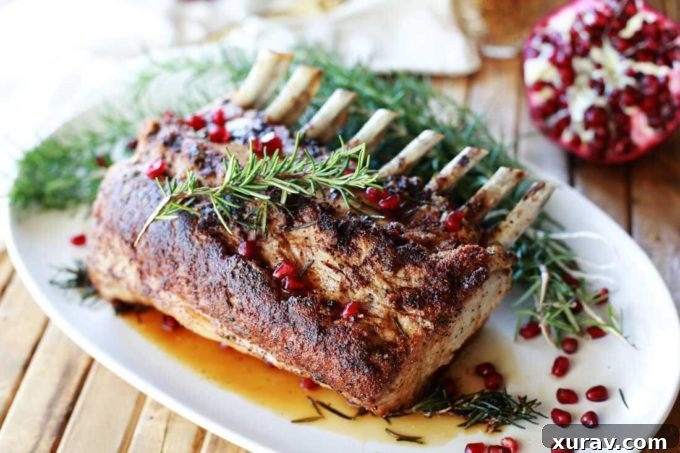
Unveiling the Secrets to a Perfectly Roasted Rack of Pork: Your Ultimate Guide to Juicy, Tender, and Flavorful Results
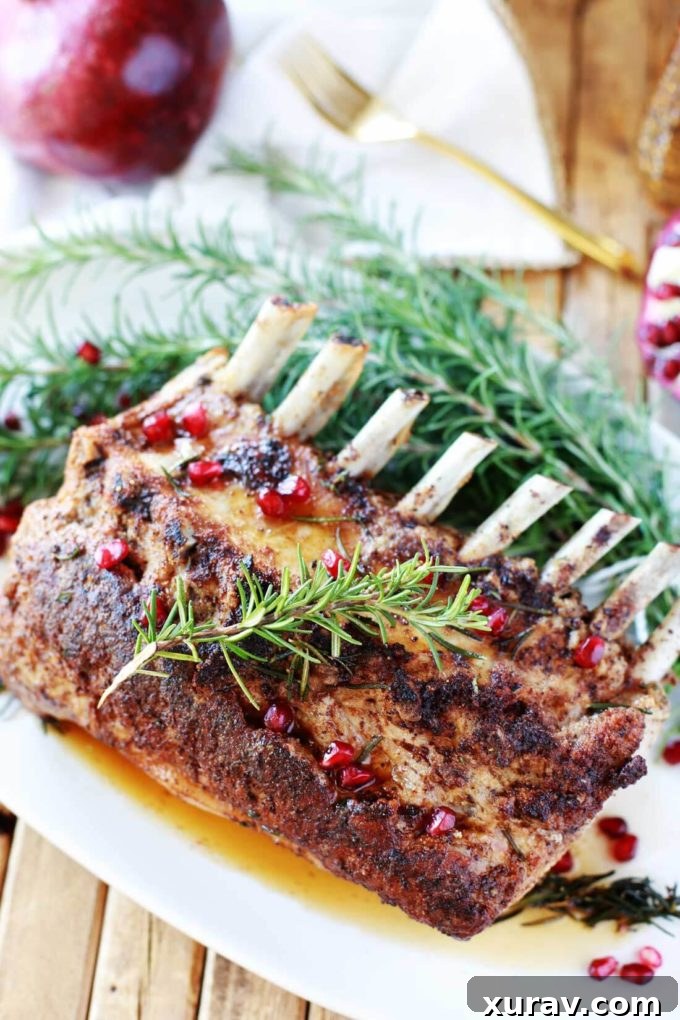
How to Perfectly Roast a Rack of Pork: A Step-by-Step Mastery Guide
©Eazy Peazy Mealz by EazyPeazyMealz.com
Pin this essential guide to your Holiday or Dinner Party board to SAVE it for later!
Follow Eazy Peazy Mealz on Pinterest for more exceptional tips, creative ideas, and delicious recipes!
There’s an undeniable joy in presenting a perfectly cooked roast – whether it’s a succulent turkey, a magnificent prime rib, a festive ham, or the star of our show today: a breathtaking rack of pork. The secret to transforming a simple cut of meat into an unforgettable culinary experience lies in understanding the core techniques that unlock its maximum flavor and tenderness. This comprehensive guide will walk you through 8 essential steps to achieving the most juicy, tender, and super flavorful rack of pork you’ve ever tasted. Prepare for compliments!
For this incredible journey into pork roasting mastery, I’ve teamed up with the culinary experts at Flirting with Flavor. Together, we bring you not just the method, but also a fantastic recipe to apply these techniques. I’ll share all the crucial tips for roasting an impeccably cooked rack of pork, while Flirting with Flavor provides her exquisite recipe. You can access her amazing Rosemary Roasted Rack of Pork with Pomegranate Au Jus by clicking here. Mastering these fundamental steps ensures that no matter what flavors or seasonings you choose, your roasted rack of pork will always be a resounding success.
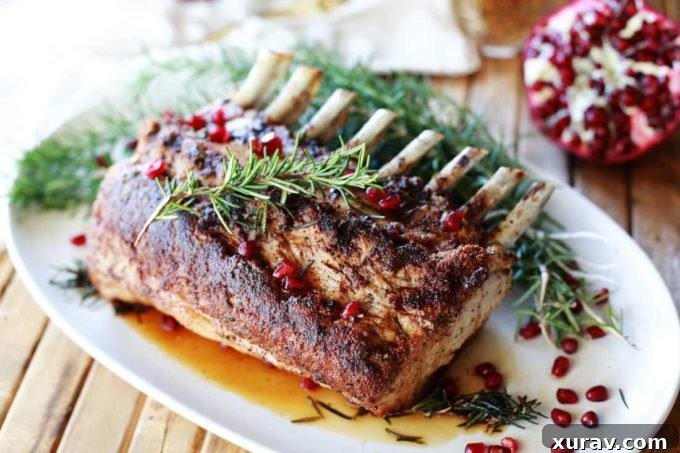
Step One: The Essential Brine for a Juicy Rack of Pork
If you’ve followed our incredibly popular guide on how to cook a perfect turkey, you’ll recognize the critical importance of brining. This step is not just repetitive; it’s foundational for any succulent roast, especially pork. Brining is a game-changer, infusing a tremendous amount of both moisture and flavor deep into the meat fibers. The last thing anyone wants is a dry, uninspiring pork roast. By planning ahead and allowing your rack of pork to brine in the refrigerator for a full 24 hours, you guarantee an unparalleled level of moisture retention and a robust flavor profile that will elevate your roasted rack of pork to new heights.
The science behind brining is fascinating: the salt in the brine denatures the proteins in the meat, causing them to unravel and create microscopic spaces that absorb and trap moisture. This process, along with the added aromatics and seasonings in the brine, ensures your pork remains incredibly juicy throughout the cooking process. For an exceptional pork brine recipe specifically designed to enhance flavor and tenderness, head over to FlirtingwithFlavor.com.
Step Two: Thoroughly Dry and Rest the Pork Roast to Achieve a Perfect Sear
Once your rack of pork has completed its 24-hour brine, carefully remove it, rinse it under cold water to remove any excess salt from the surface, and then pat it completely dry with paper towels. This drying process is crucial. Next, place the pork on a baking tray lined with a cooling rack. This setup allows air to circulate around all sides of the roast. Let it sit uncovered in the refrigerator for several hours, or even overnight if possible, to air dry. Critically, you also want the pork to come to room temperature before cooking, which typically takes about 1-2 hours on the counter, depending on its size.
The importance of air drying cannot be overstated: a dry surface is essential for achieving the coveted Maillard reaction, which creates a beautiful golden-brown crust and complex, caramelized flavors when seared. If the surface of the meat is wet, it will steam rather than sear, resulting in a bland, grey exterior – decidedly unappetizing. Furthermore, bringing the roast to room temperature ensures more even cooking throughout, preventing areas from becoming overcooked while others remain undercooked. This simple step sets the stage for a truly perfectly roasted rack of pork.
Step Three: Master the Art of Scoring the Roast for Maximum Flavor and Crispness
With your rack of pork thoroughly rested and dry at room temperature, it’s time for another critical step: scoring the fatty side of the roast. Using a very sharp knife – like those in my trusted Calphalon Knife Set, which I love for its self-sharpening feature ensuring my knives are always sharp and ready – carefully score the fat cap. Create a cross-hatch pattern, making sure to cut only through the fat and not into the underlying meat. Shallow scores are best, creating a diamond pattern across the surface.
This step, though simple, provides multiple benefits, much like the brining process. Scoring exposes more of the fat to the heat, allowing it to render more efficiently during cooking. This rendered fat not only bastes the meat from above, adding incredible flavor and keeping it moist, but it also crisps up beautifully, creating a delightful texture. Additionally, the scored surface allows your seasonings and rub to penetrate more deeply into the fat and muscle, ensuring every bite of your roasted rack of pork is bursting with flavor. It’s another layer in our flavor-building strategy.
Step Four: Layering Flavor with the Perfect Seasoning for Your Rack of Pork
Achieving the best possible roasted rack of pork is all about layering flavors, building complexity with each step. We’ve already infused flavor through brining, and now it’s time to add another dimension with a carefully chosen seasoning rub. This rub will adhere to the scored fat and exposed meat, creating a crust of aromatic spices and herbs that will caramelize and deepen during roasting.
Whether you prefer a simple blend of salt, pepper, and garlic powder, or a more elaborate mix of rosemary, thyme, paprika, and brown sugar, apply your chosen rub generously to all surfaces of the pork. Massage it gently into the scored fat, ensuring it gets into every crevice. For the ultimate rub specifically designed to complement a pork roast and enhance its natural sweetness and savory notes, I highly recommend heading over to FlirtingwithFlavor.com to grab their amazing recipe. This step is where your personal touch can truly shine, defining the flavor profile of your perfectly roasted rack of pork.
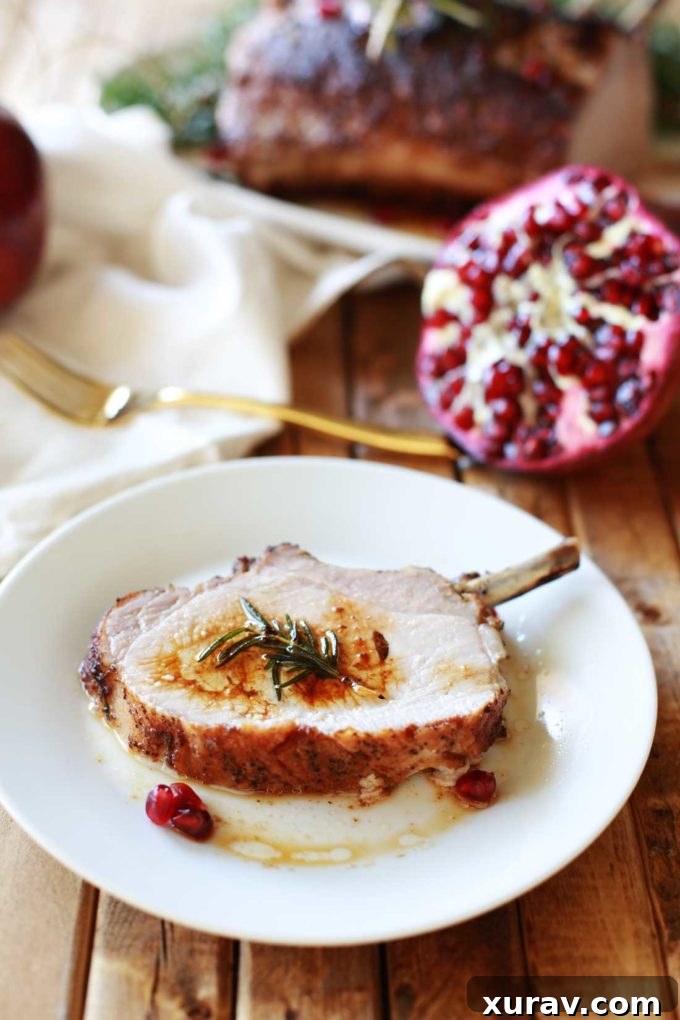
Step Five: The Power of Searing for Enhanced Flavor and Moisture
Remember how we emphasized air drying our roast? This meticulous preparation now pays off. Searing is a non-negotiable step for a truly exceptional rack of pork. Heat a heavy-bottomed pan, like a cast-iron skillet, over high heat until it’s scorching hot. Add a small amount of high smoke point oil, and then carefully place your seasoned rack of pork, fat side down, into the pan. Listen for that glorious sizzle!
The intense heat rapidly caramelizes the exterior of the pork through the Maillard reaction, creating a deep golden-brown crust that’s bursting with rich, complex flavors. This rapid browning not only adds incredible depth to the meat but also helps to “lock in” moisture, contributing to a more juicy and tender end result. Sear all sides of the roast until beautifully browned, working in batches if necessary to avoid overcrowding the pan and steaming the meat. This golden crust is not just for aesthetics; it’s a testament to the flavor development occurring on the surface of your perfectly roasted rack of pork. Are you drooling yet? You should be!
Step Six: Infusing Aromatics and Roasting to Perfection
Once your rack of pork is perfectly seared, it’s time to transfer it to a roasting pan, ideally one with a rack to allow for even circulation of heat. This is also the ideal moment to introduce fresh herbs and aromatics that will infuse the entire roasting process with another layer of sublime flavor. Scatter sprigs of fresh rosemary, thyme, and sage around the base of the roasting pan. You can also add chopped onions, garlic cloves, carrots, and celery. As the pork roasts, these aromatics will gently release their essences, creating a fragrant bed for your meat and contributing to incredible pan drippings that will later be used for basting or a luscious sauce.
Position the roast fat-side up. This ensures that as the fat renders, it will baste the meat below, keeping it wonderfully moist. Now, your rack of pork is ready for the oven, where the true transformation from a great piece of meat to a perfectly roasted masterpiece will occur.
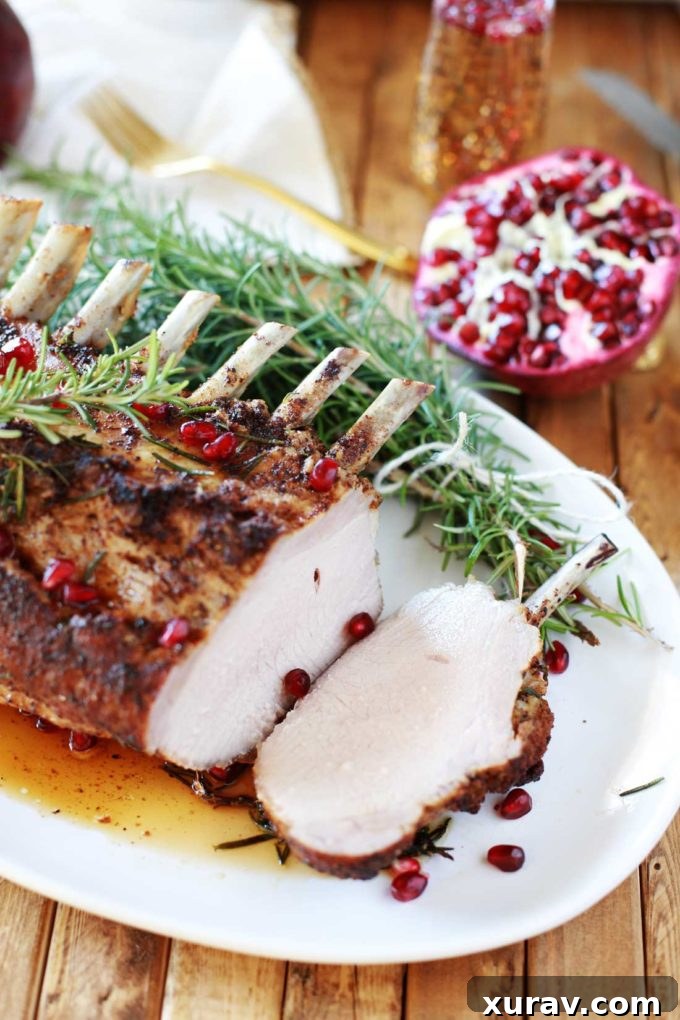
Step Seven: Basting and Precise Temperature Control for Unrivaled Juiciness
While I often lean towards being a “lazy cook,” there are certain dishes where the extra effort yields phenomenal results, and a perfectly roasted rack of pork is one of them. Basting is one of those efforts that truly pays off, delivering an extra punch of flavor and ensuring your roast remains beautifully moist throughout its journey in the oven. For this, a reliable baster is key. This baster is a fantastic choice, even coming with a marinade injector needle and a brush for easy cleanup.
Throughout the roasting time, baste your rack of pork every 10-15 minutes using the delicious, herby pan juices that accumulate at the bottom of your roasting pan. This continuous showering of flavor keeps the exterior moist and flavorful, contributing to that irresistible crust. But basting alone isn’t enough; precise temperature control is paramount. For a pork roast, the USDA recommends a final internal temperature of 145°F (63°C) for safe consumption, which results in a wonderfully tender and slightly pink center. To achieve this, you’ll want to remove your roast from the oven when its internal temperature, measured with an instant-read meat thermometer inserted into the thickest part of the meat (avoiding bone), reaches about 138-140°F (59-60°C). This accounts for “carry-over cooking,” where the internal temperature will continue to rise by 5-10 degrees during the resting period. Timing is crucial for a perfectly roasted rack of pork that is both safe and succulent.
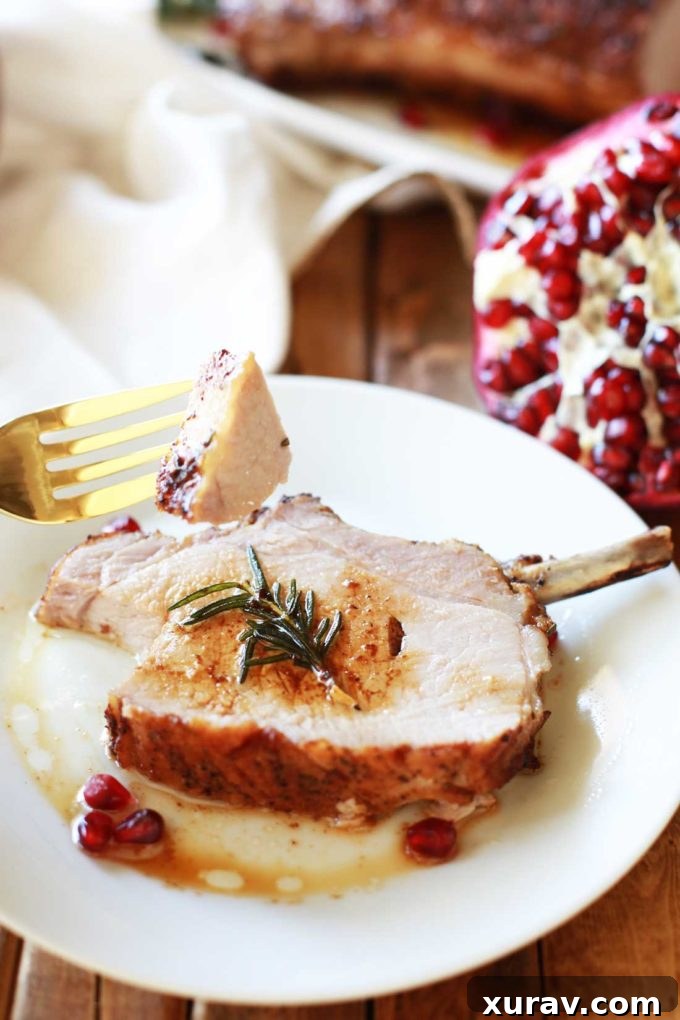
Step Eight: The Crucial Resting Period for Unrivaled Juiciness and Tenderness
This final step is perhaps the most overlooked, yet it is absolutely critical for a perfectly roasted rack of pork. Once your roast reaches an internal temperature of 138-140°F (59-60°C), remove it from the oven immediately. Transfer it to a clean cutting board and tent it loosely with aluminum foil. Allow the roast to rest for at least 15-20 minutes before carving and serving. During this resting period, two vital processes occur.
Firstly, carry-over cooking: as mentioned, the internal temperature of the roast will continue to rise by several degrees, ensuring it reaches the safe and delicious 145°F (63°C) target. Secondly, and equally important, is the reabsorption and redistribution of juices. When meat cooks, its muscle fibers contract, pushing the moisture to the center. If you slice into the roast too soon, all those precious, flavorful juices will flood onto your plate, leaving you with dry, tough meat. Resting allows these juices to redistribute throughout the entire roast, relaxing the muscle fibers and resulting in every single bite being incredibly juicy, tender, and delicious.
You can learn more about recommended cooking temperatures and food safety guidelines on the USDA website. If your kitchen is particularly cool and you’re concerned about the roast cooling down too much during resting, you can tent it more tightly with foil, but ensure it’s still loose enough to allow some steam to escape. Make this decision based on the ambient temperature. Patience is truly a virtue here; this short wait will reward you with a magnificent, perfectly roasted rack of pork that is utterly irresistible!
Now you possess the knowledge and techniques on How To Perfectly Roast a Rack of Pork!
Okay, now isn’t mastering this art incredibly rewarding?
Don’t forget to head over to FlirtingwithFlavor.comto get her exquisite recipe for Rosemary Roasted Rack of Pork with Pomegranate Au Jus, and put these mastery steps into delicious action.
And be sure to pin this ultimate guide to your HOLIDAY or DINNER PARTY board to keep these secrets handy:
Explore More Holiday Food Tips and Culinary Inspiration
- Caramelized Onion, Fig & Goat Cheese Bites: The Perfect Holiday Appetizer
- Savoring the Flavors: A Guide to Christmas Market Food Around the World
- Experience the Magic: A Comprehensive Guide to German Christmas Markets
- Sweet Indulgence: 30+ Irresistible Christmas Cookie Recipes
- Decadent Delight: Cookies and Cream Caramel Layer Bars Recipe
We’re constantly exploring the world of food, from bustling open markets and charming local restaurants to prestigious top chef schools. Let us know what other culinary tips, global food adventures, or delicious recipes you’d love to see next!