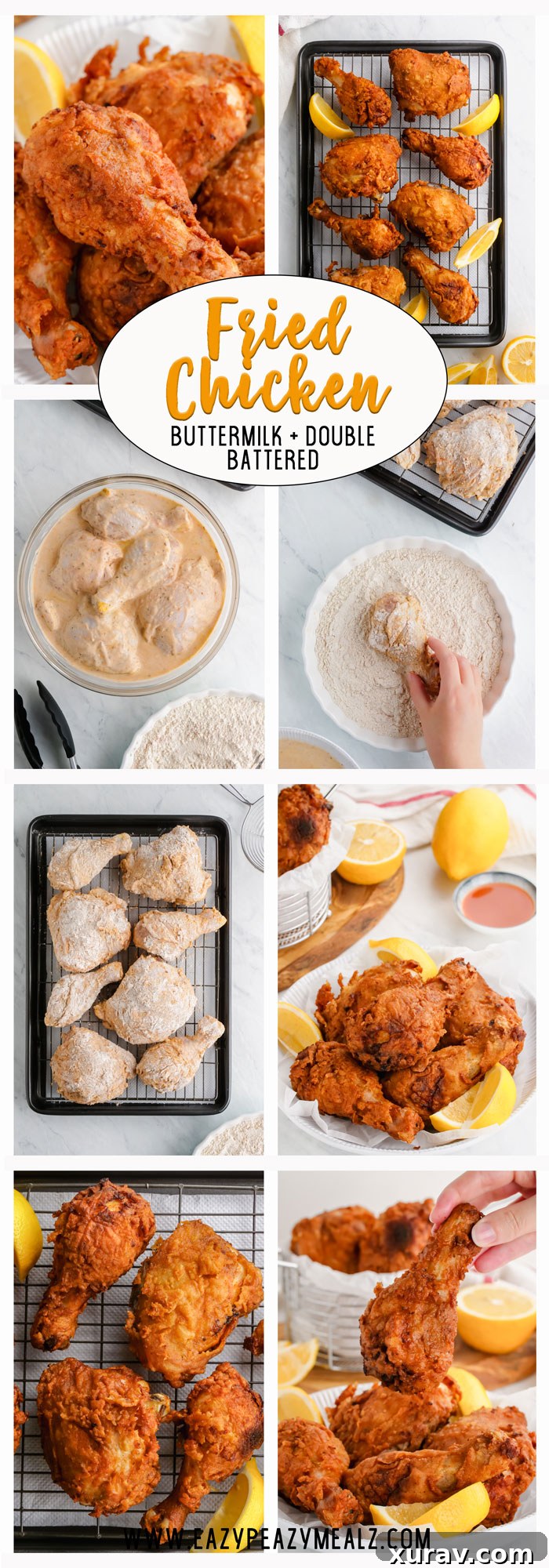
Unlock the Secret to the Best Crispy Fried Chicken Recipe
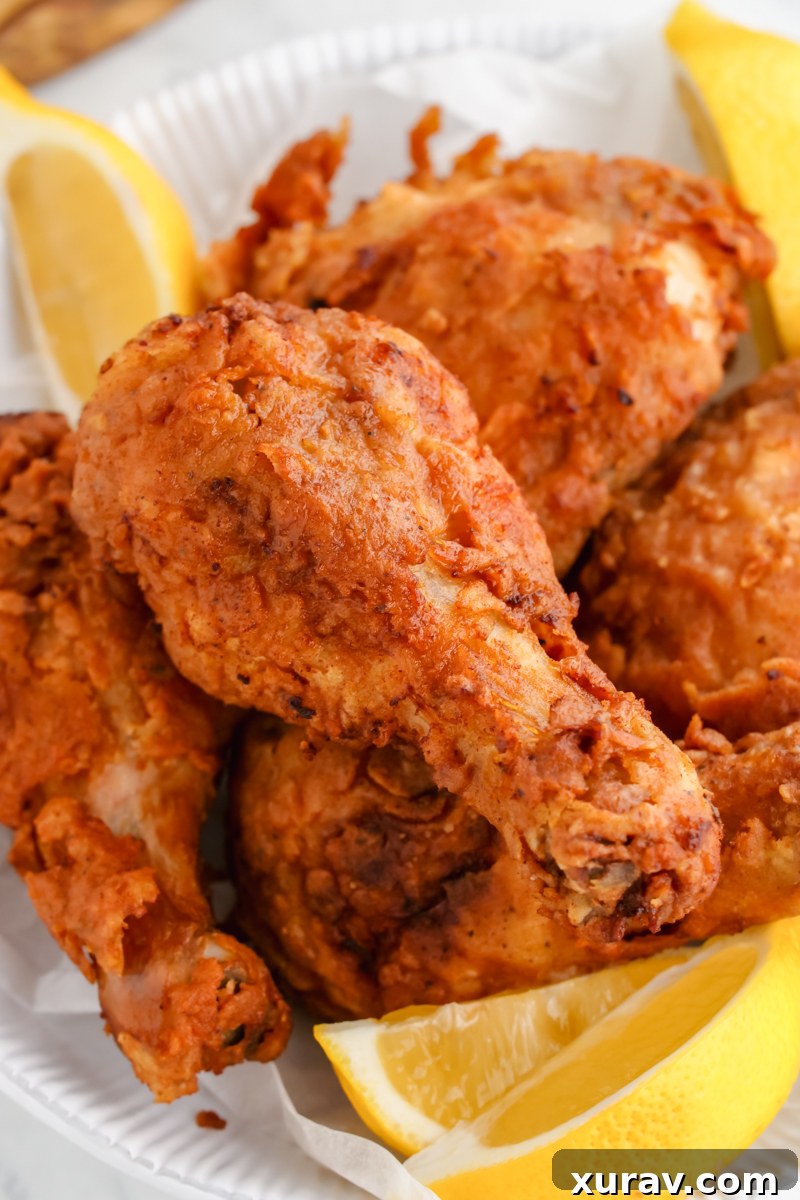
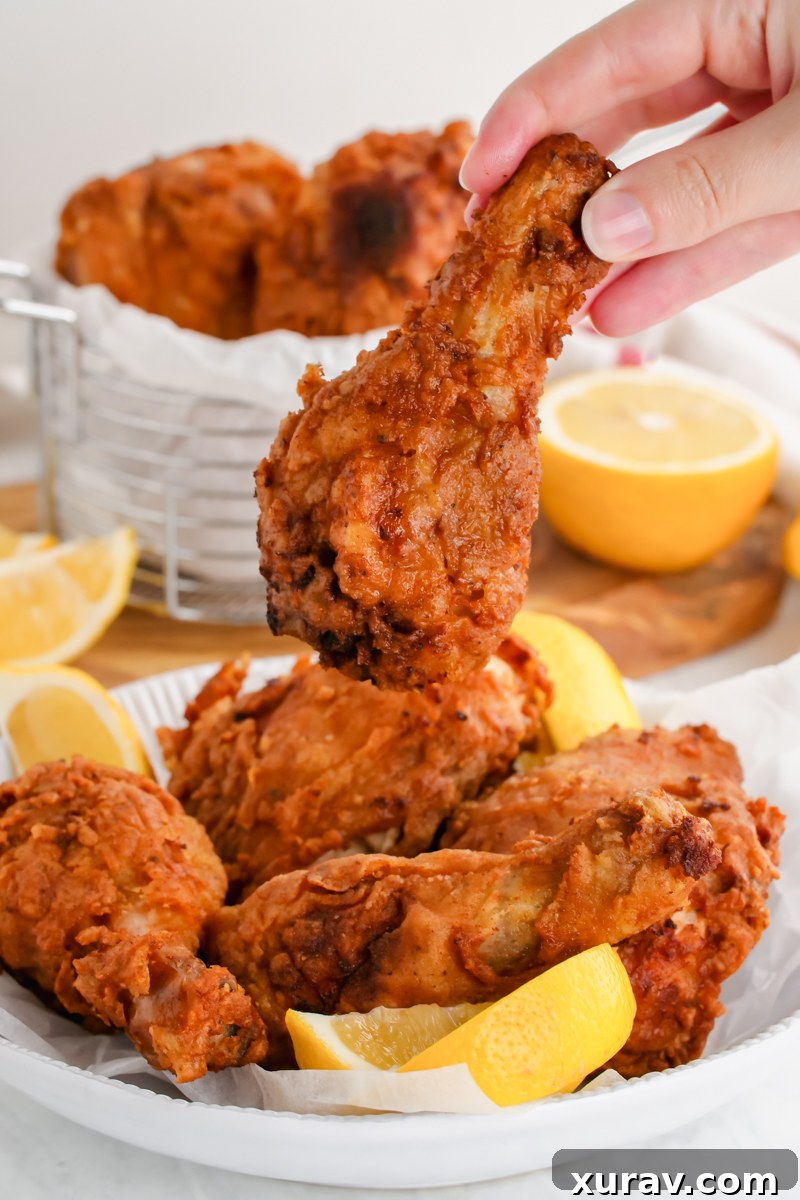
Craving that perfect bite of crispy fried chicken? You’ve come to the right place! This recipe delivers an exceptionally juicy interior encased in a golden, crunchy coating that is bursting with savory flavor. Whether you’re planning a family picnic or simply indulging in classic comfort food, this fried chicken is a guaranteed crowd-pleaser, delicious served hot or cold. If you’ve ever dreamt of mastering the art of extra crispy fried chicken, your journey starts here.
Our method involves a strategic buttermilk marinade, infusing the chicken with unparalleled tenderness and a rich, subtle tang. Coupled with a clever double-battering technique, this recipe ensures every piece achieves that coveted, ultra-crisp exterior while retaining its succulent, flavorful juices within. Prepare to elevate your fried chicken game to a whole new level!
Fried chicken is the quintessential comfort food, a dish that brings smiles to faces and warmth to gatherings. It pairs beautifully with an array of classic American sides like creamy corn casserole, hearty baked beans, and light, fluffy buttermilk biscuits. This combination creates a truly unforgettable meal that tastes like home.
The Pillars of Perfect Fried Chicken: Crisp, Juicy, and Flavorful
In my culinary philosophy, a truly exceptional fried chicken must meet three fundamental criteria:
- An irresistibly crispy exterior.
- A wonderfully juicy and tender interior.
- An abundance of deep, savory flavor.
This comprehensive recipe meticulously addresses each of these requirements, providing you with all the expert tips and tricks necessary to create the finest fried chicken you’ll ever taste. We’ll delve into everything from selecting the ideal frying oil and maintaining the perfect temperature to understanding the magic behind buttermilk marination and the benefits of a double batter. Once you experience the results of these carefully curated steps, you’ll understand why this method is simply unparalleled, transforming your perception of homemade fried chicken forever.
How to Achieve Flawless Fried Chicken
Crafting truly amazing fried chicken is a straightforward process when broken down into these three essential steps:
- Begin by marinating the chicken in a well-seasoned buttermilk mixture to tenderize and infuse flavor.
- Next, execute a double dredge in seasoned flour, creating that robust, crispy coating.
- Finally, fry the chicken in peanut oil until it reaches a beautiful golden-brown hue and achieves ultimate crispiness.
Why Buttermilk is a Game-Changer for Fried Chicken
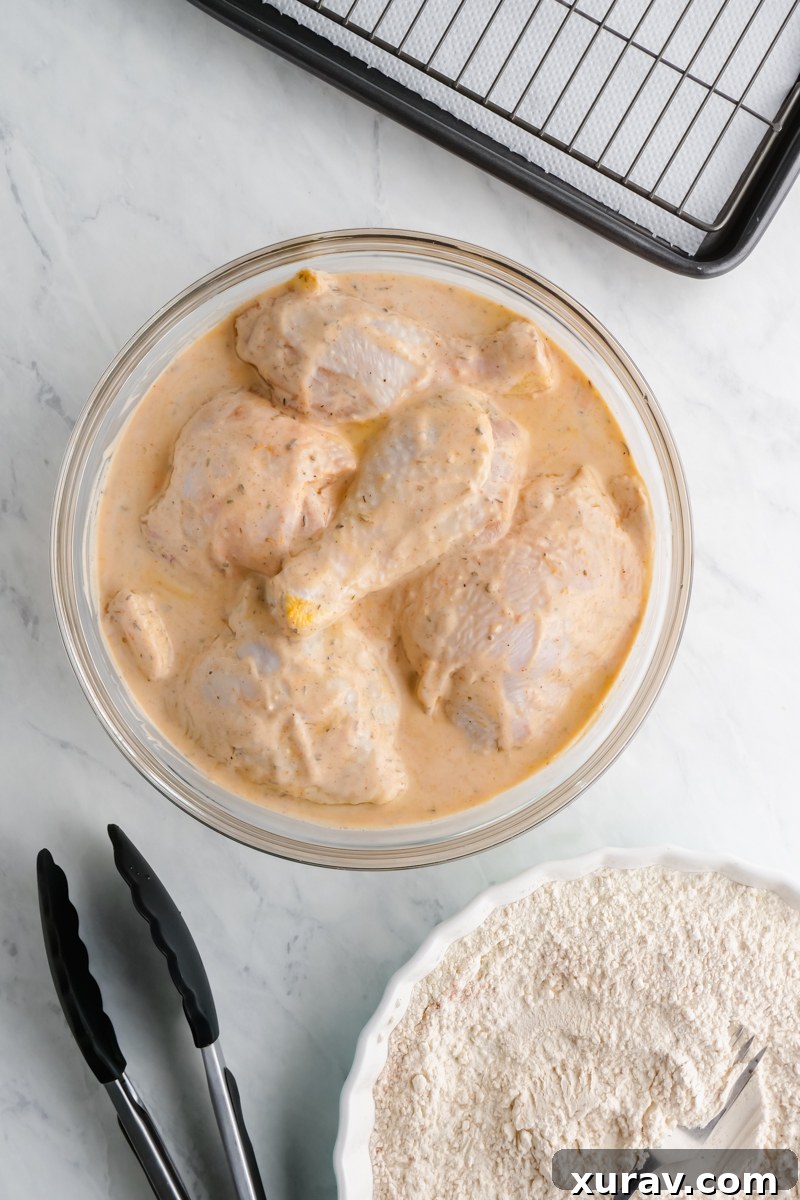
While chicken is generally a tender meat that doesn’t always require marination, buttermilk offers unique advantages. Unlike highly acidic marinades containing ingredients like lemon juice or vinegar, which can sometimes toughen poultry, buttermilk’s mild acidity works differently. It tenderizes the chicken without compromising its texture, ensuring the meat remains succulently soft.
The natural enzymes present in buttermilk play a crucial role. They gently break down the protein fibers in the chicken, resulting in a remarkably tender and exceptionally flavorful fried chicken. This subtle yet powerful process ensures a moist and juicy outcome that acidic alternatives simply can’t match.
Buttermilk Alternatives for Your Crispy Fried Chicken
If buttermilk isn’t readily available, don’t let that deter you from making incredible crispy fried chicken. The goal is to use an acidic liquid that helps the chicken retain its juiciness while gently breaking down proteins for tenderness. Here are some effective substitutes:
Homemade Buttermilk Substitute:
This is a quick and easy solution for when you’re in a pinch:
- Add 1 tablespoon of white vinegar or lemon juice to a 1-cup measuring cup.
- Fill the remainder of the cup with whole or low-fat milk.
- Allow the mixture to sit for approximately 5-10 minutes, or until it noticeably curdles. This creates a mild acidic environment similar to buttermilk.
Other Marinade Options:
You can also marinate your chicken in plain yogurt with added seasonings. Its creamy texture and mild acidity offer a similar tenderizing effect. Alternatively, an equal amount of pickle juice can be used, providing a distinct tangy flavor that many find irresistible in fried chicken. The key is to select an ingredient that will help keep the chicken moist and tender throughout the cooking process.
Taking this essential marinating step, whether with traditional buttermilk or a clever substitute, is absolutely crucial for creating the most flavorful and tender fried chicken. It’s an investment of time that truly pays off in the final taste and texture of your dish.
The Unbeatable Crunch: Why Double Dredging is Essential
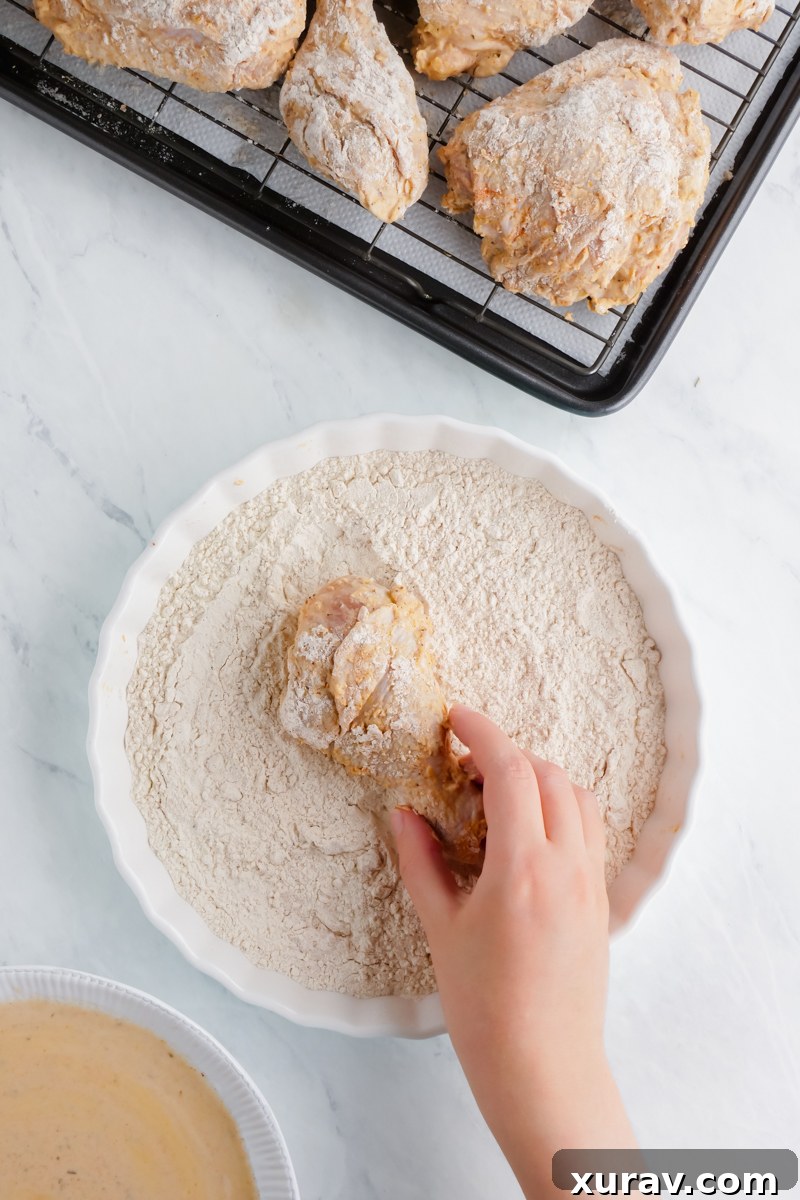
Dredging chicken is the process that builds the foundation for that magnificent golden, crispy exterior. However, to achieve truly superior crispiness, a single coating often isn’t enough. This is where the technique of double dredging shines.
When you double dredge, you essentially create a thicker, more robust layer of seasoned flour around the chicken. Upon frying, this extra layer transforms into a formidable crust, providing significantly more crunch and a richer flavor profile than a single coat could offer. It traps moisture inside the chicken while creating an almost impenetrable barrier against the hot oil, leading to a moist interior and an incredibly satisfying crunch on the outside.
While it adds an extra step to the preparation, the exceptional results make it well worth the effort. However, if time is a critical factor, you can opt for a single dredge, just be extra careful not to accidentally dislodge any of that precious coating before frying. That robust, flavorful crust is what makes fried chicken so irresistible!
Choosing the Right Oil: Why Peanut Oil Reigns Supreme for Frying
The choice of oil is paramount in achieving perfectly fried chicken. Peanut oil is often considered the gold standard for this task due to several key characteristics:
- High Smoke Point: Peanut oil can withstand high temperatures without breaking down or smoking excessively. This is crucial for deep frying, as it prevents the oil from imparting burnt flavors to your chicken.
- Neutral Taste: Its neutral flavor profile ensures that the delicious seasonings and natural taste of the chicken are the stars of the show, rather than being masked by the oil itself.
- Healthier Profile: Compared to traditional frying fats like lard or shortening, peanut oil is lower in saturated fat and higher in monounsaturated fats. While fried chicken is a treat, using a “better for you” oil makes it a slightly less guilty pleasure.
Alternative Frying Oils:
If you have a peanut allergy or simply prefer an alternative, canola oil is an excellent substitute for frying chicken. It also boasts a high smoke point and a neutral flavor, making it equally effective for achieving crispy, golden results.
Regardless of the oil you choose, one principle remains constant for exceptional fried chicken: meticulous temperature control. Heating your oil to the precise temperature and diligently maintaining it throughout the frying process is critical for achieving that perfect balance of a crispy exterior and a thoroughly cooked, juicy interior.
The Importance of Room Temperature Chicken
When cold chicken is introduced to hot oil, it causes a significant and immediate drop in the oil’s temperature. While some temperature fluctuation is normal, a drastic drop can lead to greasy, unevenly cooked chicken. To counteract this, always ensure your chicken pieces are at room temperature before frying. This helps maintain a more consistent oil temperature, promoting even cooking and a superior crisp.
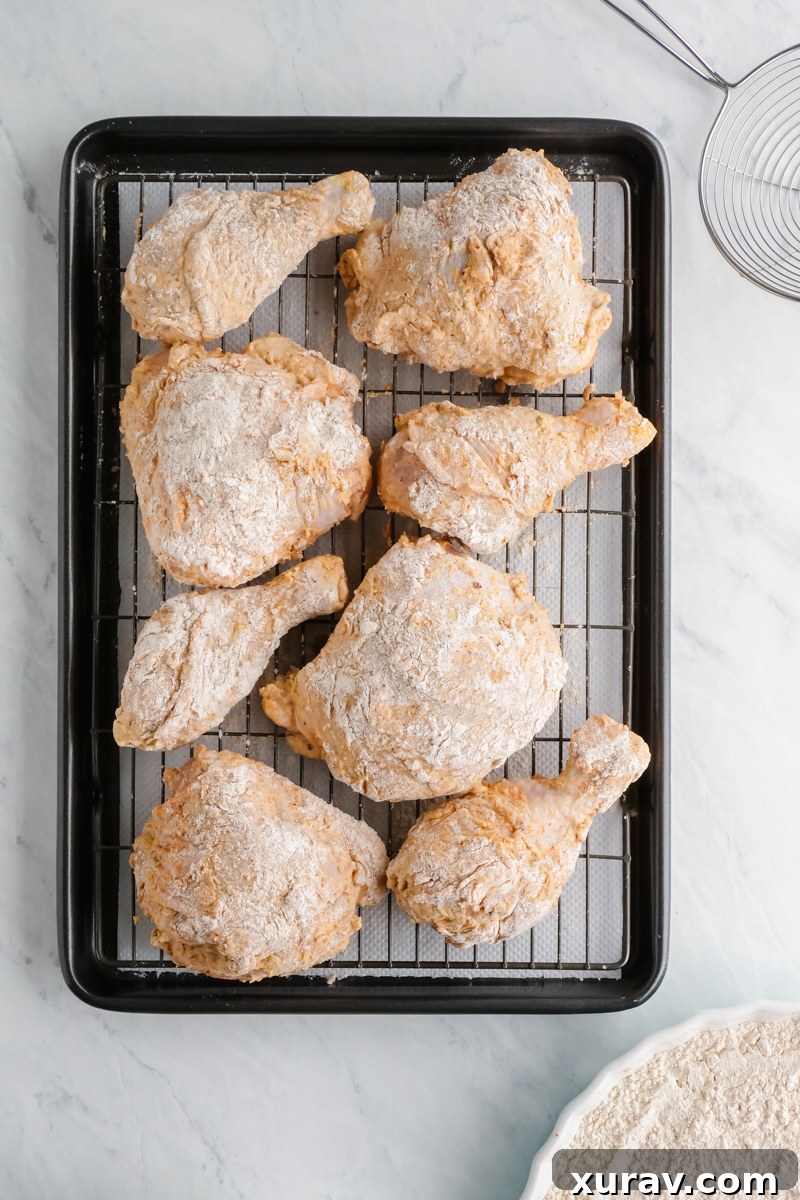
Pro Tip: After dredging your chicken, let it rest on the counter for about 30 minutes. This allows the chicken to come up to room temperature, which helps stabilize oil temperature during frying, and also helps the breading adhere better.
Can I Achieve Crispy Results by Baking This Fried Chicken Recipe?
While the classic fried chicken experience is undeniably superior when deep-fried, it is certainly possible to achieve a crispy exterior and juicy interior through baking, especially if you’re looking to reduce calories and fat. However, based on extensive testing, it’s important to manage expectations—the texture won’t be identical to deep-fried, but it can still be incredibly delicious.
If you choose the baked route, here’s how to adapt this recipe for the oven:
- Prepare as Directed: Follow all the initial steps: marinate the chicken in buttermilk and execute the double batter dredge.
- Preheat Oven: Preheat your oven to a high temperature of 425 degrees Fahrenheit (220 degrees Celsius).
- Arrange Chicken: Place the chicken pieces on a baking sheet fitted with a cooling rack. This setup is crucial, as it allows air to circulate around all sides of the chicken, promoting crispiness. Be sure to lightly spray the cooling rack with cooking oil to prevent sticking. Arrange the chicken pieces with ample space between them to ensure even air circulation and crisping.
- Initial Bake: Lightly spray the battered chicken pieces with cooking spray (this helps achieve a golden-brown and crispy texture) and bake for 25 minutes.
- Flip and Continue Baking: Carefully turn each piece of chicken over, taking care not to disturb the delicate batter. Continue baking for an additional 25 minutes, or until the internal temperature in the thickest part of the chicken reaches 165 degrees Fahrenheit (74 degrees Celsius). A meat thermometer is your best friend here.
- Broil for Extra Crisp: For that final touch of golden crispness, turn your oven to the broil setting. Broil the chicken for 2-3 minutes, monitoring it very closely to prevent burning. This brief broil will enhance the color and crunch of the crust.
Troubleshooting Common Fried Chicken Problems
Making delicious fried chicken can seem intimidating, but with the right knowledge, you can avoid common pitfalls. If you’ve struggled in the past, rest assured that this guide will help you sidestep those frustrating issues and achieve perfect results every time.
Why is my homemade fried chicken not crispy?
Achieving that coveted crispy crust is the hallmark of great fried chicken. If yours isn’t reaching peak crispiness, here are the likely culprits and how to fix them:
- Inconsistent Heat: This is arguably the most common issue. When oil temperature fluctuates wildly, the chicken either cooks too slowly and absorbs excess oil, or it burns on the outside before cooking through. You can avoid this by using a reliable deep-fry thermometer to constantly monitor and adjust the oil temperature.
- Cold Chicken: Placing cold chicken directly into hot oil causes an immediate and drastic temperature drop. This delays the crust from forming properly and can lead to a soft, greasy coating. To mitigate this, always bring your chicken up to room temperature by letting it sit on the counter for at least 30 minutes after dredging, just before frying.
- Heat Too Low: If the oil isn’t hot enough, the chicken will cook slowly, giving the breading ample time to absorb oil rather than crisping up. The result is a dense, oily, and heavy crust instead of a light, crunchy one. Maintain the recommended oil temperature diligently.
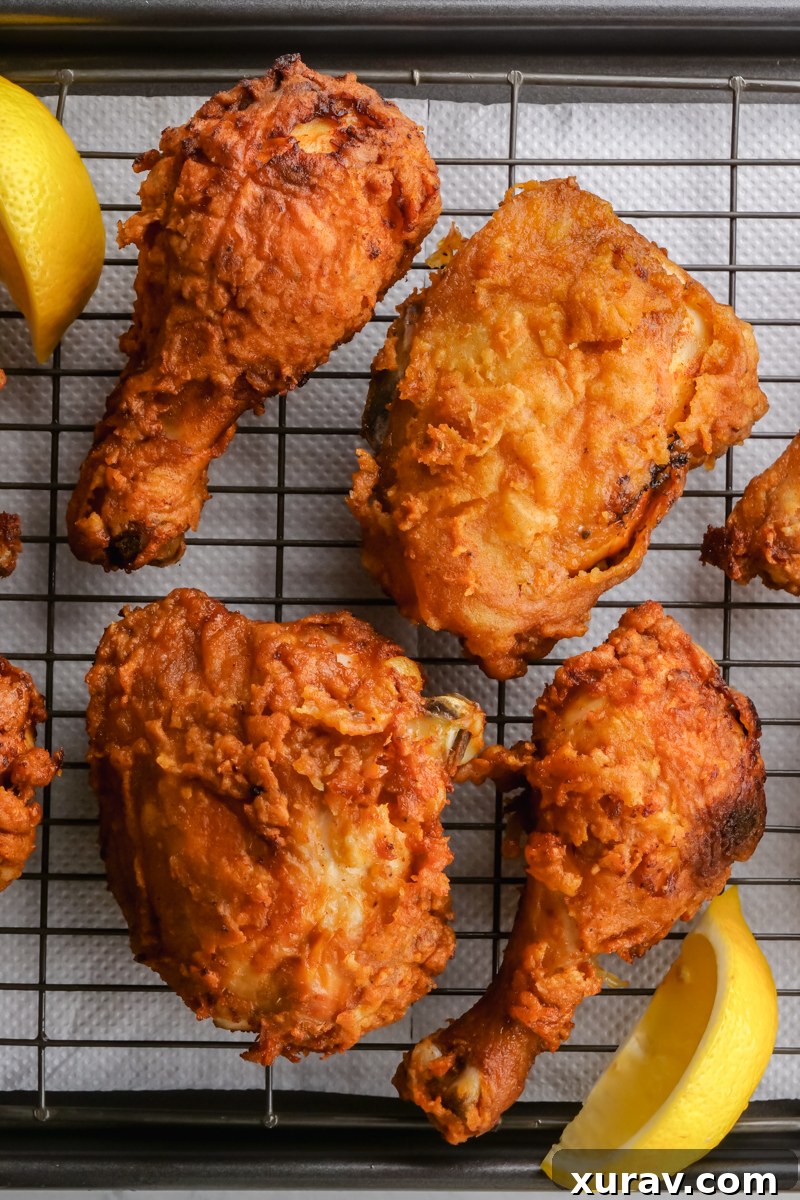
- Improper Draining: Many home cooks make the mistake of blotting fried chicken with paper towels or placing it directly on paper towels after frying, similar to bacon. While the intention is to remove excess oil, this method traps steam against the crispy crust, turning it soggy almost immediately.
The Right Way to Drain Fried Chicken:
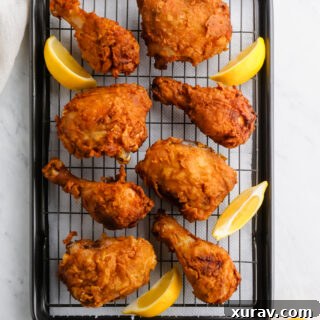
To ensure your fried chicken remains beautifully crispy after cooking, always drain it on a cooling rack placed over a baking sheet lined with paper towels. The rack allows air to circulate underneath the chicken, preventing steam buildup, while the paper towels absorb any excess oil without compromising the crispness of the crust.
Should you cook chicken before deep frying?
Absolutely not! Pre-cooking chicken before deep frying can lead to overcooked, dry meat and an unpleasant texture. The beauty of deep frying is that, when executed correctly with the right oil temperature, the chicken cooks through perfectly while simultaneously developing a golden, crispy exterior. The key is precise temperature control; you want the interior to reach a safe cooking temperature (165°F or 74°C) just as the exterior achieves that desirable dark, crispy, and flavorful crust, without burning.
Can you put floured chicken in the fridge?
While technically possible, it is strongly advised against putting floured chicken in the fridge. The moisture from the chicken will cause the flour coating to become gummy and soggy as it sits, completely compromising the crispy texture you’re trying to achieve. Additionally, juices can seep out and mix with the flour, making it difficult to get that perfect dredge. If you need to prepare elements ahead of time, consider prepping your seasoned flour mix and your seasoned buttermilk marinade separately and storing them in the fridge. Then, dredge the chicken immediately before frying for the best results.
Essential Tips for the Best Ever Fried Chicken
Achieving truly legendary fried chicken consistently requires attention to detail. Here are our top tips to ensure your homemade fried chicken is nothing short of spectacular:
- Choose Your Pieces Wisely: You can purchase a whole chicken and butcher it yourself into your preferred cuts, or simply buy pre-cut pieces like drumsticks, thighs, wings, or breasts. Ensure pieces are roughly uniform in size for even cooking. For optimum flavor and juiciness, many prefer dark meat cuts like thighs and drumsticks.
- Master the Marination: Don’t skip the buttermilk marinade! This crucial step tenderizes the chicken, breaks down proteins, and infuses it with incredible flavor thanks to the added seasonings. Aim for 4-6 hours, or even overnight, for maximum impact. However, avoid marinating for excessively long periods (e.g., more than 24 hours), as this can sometimes lead to a mushy texture.
- Embrace the Double Batter: This is a secret weapon for an extra thick, incredibly crispy, and flavorful crust, a technique favored by many culinary experts. After the initial dredge in seasoned flour, dip the chicken back into the reserved buttermilk marinade (or a fresh buttermilk dip) and then back into the seasoned flour for a second coating. The added layers create more nooks and crannies for ultimate crispiness.
- Invest in the Right Cookware: For deep frying, a heavy-bottomed pot like a cast iron skillet or an enamel-coated Dutch oven is ideal. These materials excel at retaining and distributing heat evenly, which is critical for maintaining a consistent oil temperature and ensuring your chicken cooks uniformly without burning or becoming greasy.
- Prioritize Oil Temperature Control: A good deep-fry thermometer is non-negotiable. Constantly monitor your oil temperature, aiming for the recommended 350°F (175°C). When you add chicken, the temperature will drop; adjust your heat source to bring it back up to temperature gradually. Consistent oil temperature ensures the chicken cooks through without drying out and the crust gets perfectly golden and crisp.
- Don’t Overcrowd the Pot: Fry chicken in batches, leaving plenty of space between pieces. Overcrowding significantly drops the oil temperature and leads to soggy, unevenly cooked chicken. Patience is key!
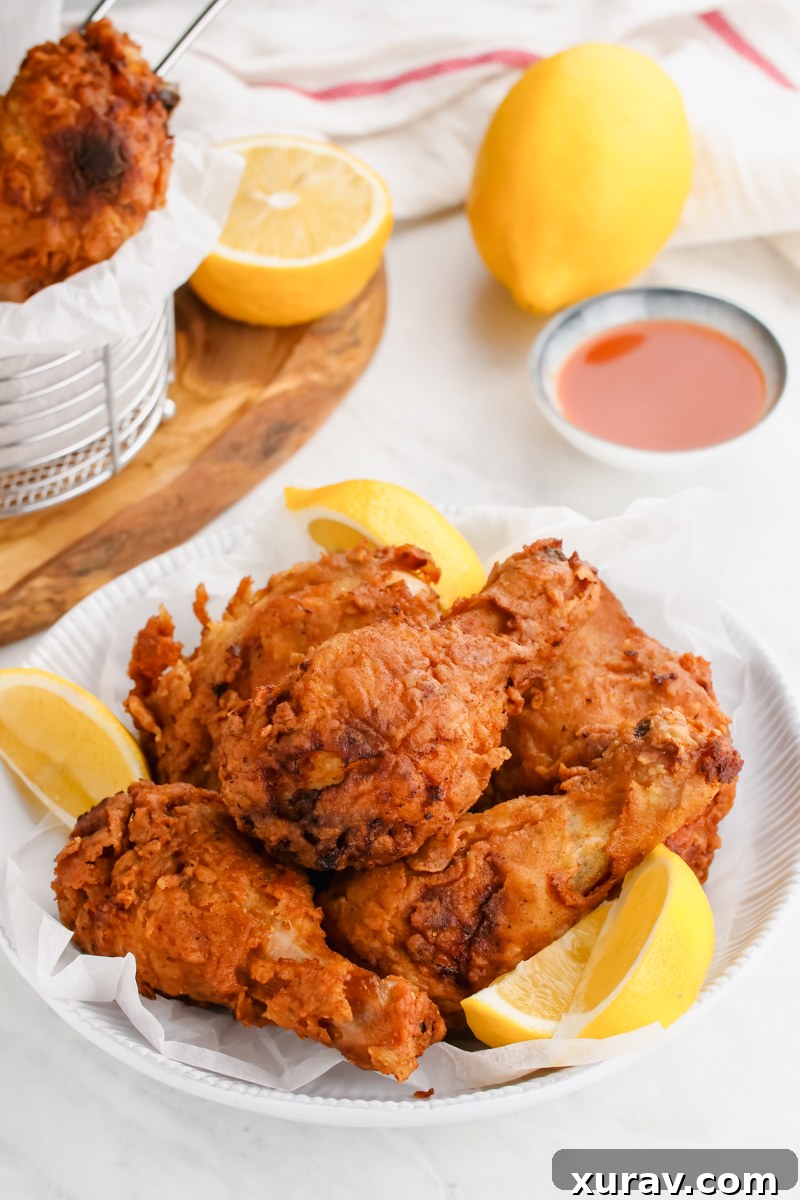
What to Serve With Your Amazing Fried Chicken:
Round out your perfect fried chicken meal with these classic and complementary side dishes:
- Instant Pot Baked Beans: A smoky and sweet complement to the savory chicken.
- Instant Pot Potato Salad: Creamy, tangy, and refreshing – a picnic staple.
- Buttermilk Biscuits: Soft, fluffy, and perfect for soaking up any delicious drippings.
- Cheddar Bacon Sweet Corn: A comforting and flavorful vegetable side.
- Mashed Potatoes: Creamy and smooth, ideal for a hearty meal.
- Potato Wedges: Crispy on the outside, fluffy on the inside, a great alternative to fries.
Fried Chicken
Print
Pin
Rate
Ingredients
- 4 chicken thighs
- 4 chicken drumsticks
Spice Mix
- 1 teaspoon black pepper
- 1 ½ teaspoons garlic powder
- 1 ½ teaspoons onion powder
- 1 1/4 teaspoon salt
- 1 1/2 teaspoon paprika
- 1/2 teaspoon dried rosemary
- 1/2 teaspoon ground thyme
- 1/2 teaspoon dried oregano
- 1/2 teaspoon dried sage
- 1/2 teaspoon white pepper
- 1/4 teaspoon cayenne pepper
Buttermilk Marinade
- 2 cups buttermilk
- 3 Tbs pickle juice
Seasoned Flour for Dredging
- 2 cups all-purpose flour
- 1 teaspoon salt
- 1 teaspoon paprika
- 1/2 teaspoon cayenne pepper
- 1 teaspoon chipotle powder
- 1 teaspoon garlic powder
- 1 teaspoon onion powder
- 2 1/2 quarts peanut oil for frying
Instructions
-
In a large bowl, combine the chicken pieces with all the spices for the spice mix: black pepper, garlic powder, onion powder, salt, paprika, dried rosemary, ground thyme, dried oregano, dried sage, white pepper, and cayenne pepper. Toss thoroughly to ensure all chicken pieces are evenly coated.
-
Pour in the buttermilk and pickle juice, stirring until the chicken is completely submerged and coated in the marinade.
-
Cover the bowl and refrigerate the chicken to marinate for at least 4-6 hours. For optimal flavor and tenderness, marinating overnight is highly recommended.
-
In a separate large, shallow dish, whisk together the flour and the seasonings for dredging: salt, paprika, cayenne pepper, chipotle powder, garlic powder, and onion powder. This will be your seasoned flour mixture.
-
Remove the chicken pieces from the buttermilk marinade, allowing any excess liquid to drip off. Dredge each piece thoroughly in the seasoned flour, ensuring it’s fully coated. Gently shake off any loose excess flour.
-
For the double dredge: Briefly dip each floured chicken piece back into a separate shallow dish of plain buttermilk, then immediately return it to the seasoned flour mixture for a second coating. Press the flour onto the chicken to create a thick, even layer. This double coating is key to extra crispiness.
-
Carefully transfer the double-dredged chicken to a clean plate or baking sheet, making sure not to lose any of the flour coating. Allow the chicken to rest on the counter for about 30 minutes while you prepare and heat your frying oil. This resting time allows the chicken to come to room temperature and helps the coating adhere better.
-
In a large, heavy-bottomed Dutch oven or deep fryer, heat the peanut oil over medium to medium-high heat until it reaches a consistent temperature of 350 degrees F (175 degrees C). Use a deep-fry thermometer to monitor the temperature accurately.
-
Once the oil is at the correct temperature, carefully add the chicken pieces to the Dutch oven, ensuring they are fully submerged in the oil. Do not overcrowd the pot; fry in batches if necessary. Cook for 10 minutes.
-
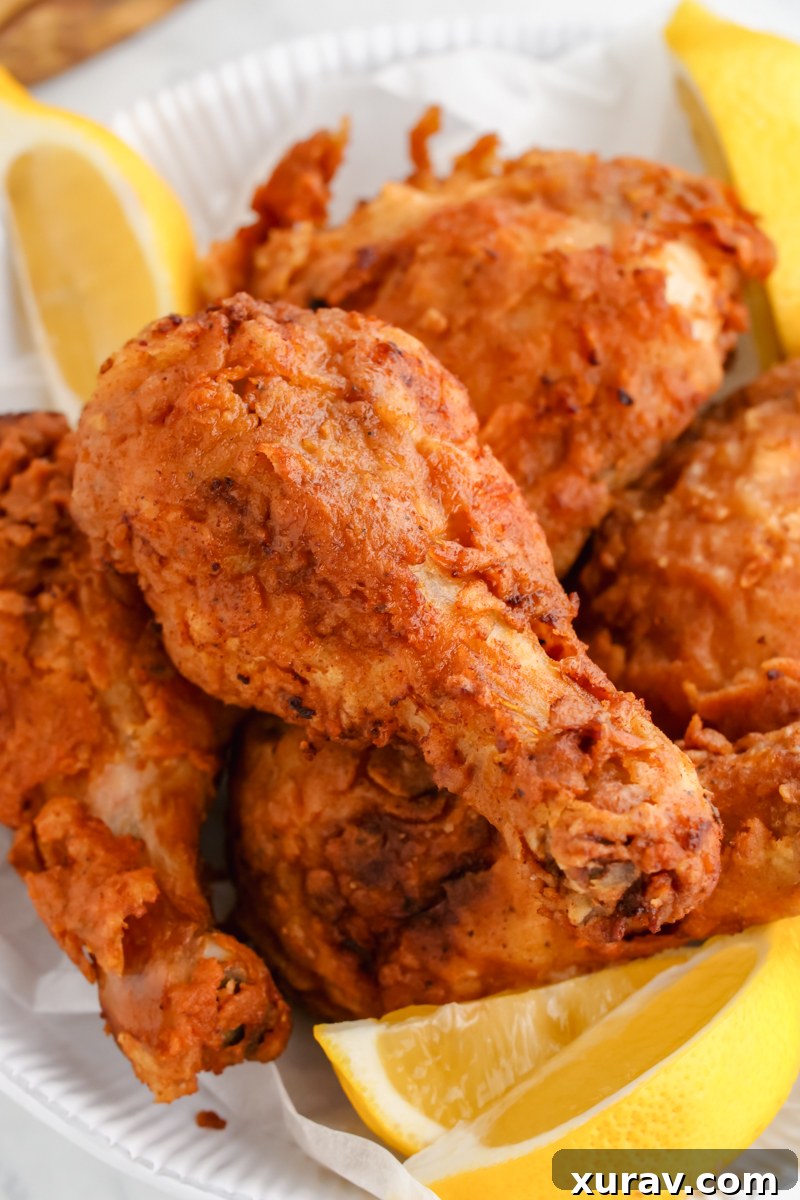
After 10 minutes, carefully turn the chicken pieces over using tongs and continue cooking for an additional 10-15 minutes, or until the internal temperature in the thickest part of the chicken reaches a safe 165 degrees F (74 degrees C). The chicken should be golden brown and exceptionally crispy.
-
While the chicken fries, prepare a baking sheet by lining it with several layers of paper towels, then place a cooling rack on top. This setup will allow proper drainage without making the crust soggy.
-
Once the chicken is fully cooked and perfectly crispy, carefully remove it from the oil and transfer it to the prepared cooling rack.
-
Allow the chicken to rest on the rack for at least 10 minutes before serving. This brief resting period allows the juices to redistribute, ensuring maximum flavor and tenderness.
Notes
Our recipe card software calculates these nutrition facts based on averages for the above ingredients. Different brands and quality of produce/meats may have different nutritional information. Always calculate your own based on the specific products you use in order to achieve accurate macros for this recipe.
 Want to use this recipe in a meal plan?Try PrePear, my FREE Meal Planning App that allows you to save your recipes, plan meals, shop for groceries, and cook simply in one place. Join Here!
Pin this recipe to your Dinner board for later: